The Forensic Science of Fastening: Why Torque is Only 10% of the Story.
The Forensic Science of Fastening: Why Torque is Only 10% of the Story.
In high-stakes EV battery and e-drive assembly, "Torque OK" does not always mean "Joint OK." Friction is the enemy of certainty. In a typical joint, up to 90% of applied torque is consumed by friction, leaving only 10% to create the actual clamping force.
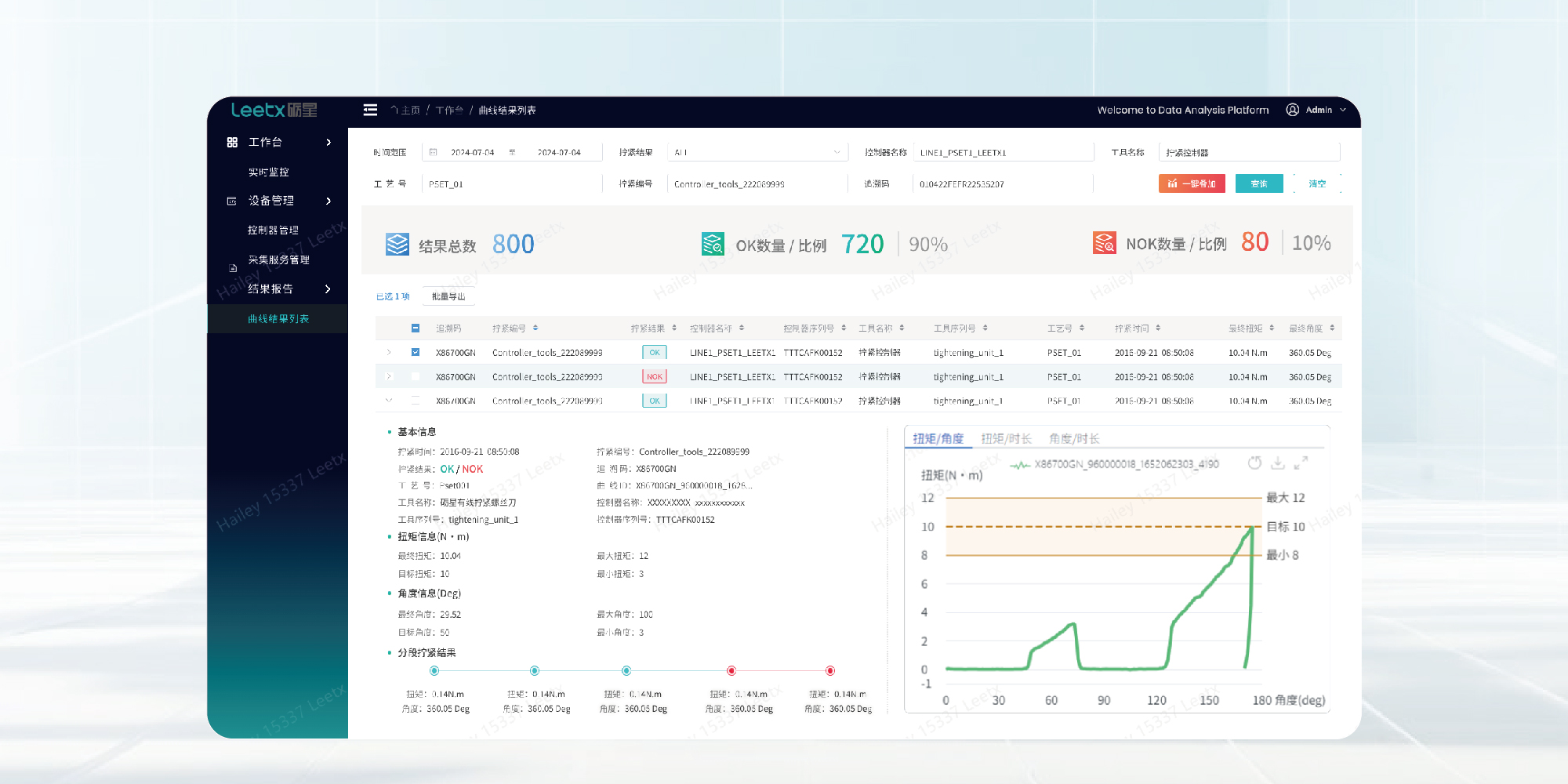
When the friction coefficient shifts due to material variations or surface contamination, your torque wrench might click, but the joint remains loose. This is where Screwdriving & Fastening transitions from a mechanical task to a data-driven one.
By capturing the full Torque-Angle Curve, we can identify:
Cross-threading: Detected by an early torque spike.
Stripped threads: Identified by a sudden torque drop at the end of the angle.
Soft joints: Characterized by an abnormal angle-to-torque gradient.
Unsere Website verwendet Cookies, die für den Betrieb der Website und für die Bereitstellung der von Ihnen
angeforderten Dienste notwendig sind. Wir möchten auch die folgenden optionalen Cookies auf Ihrem Gerät setzen.
Sie können diese Einstellungen jederzeit später ändern, indem Sie auf "Cookie-Einstellungen ändern" am unteren
Ende einer beliebigen Seite klicken. Für mehr Informationen lesen Sie bitte unsere Cookie-Informationen