















Many automation projects are not delayed because the core equipment fails to perform the required motion. More often, the delay begins after the equipment arrives on site.
Motors, drives, sensors, controllers, PLCs, HMIs, and data acquisition units all need to be integrated step by step. Wiring, parameter configuration, communication protocol setup, alarm logic tuning, and curve acquisition validation — these tasks may appear discrete, but together they steadily consume engineering time.
Press‑fitting stations follow the same pattern.
At the project planning stage, hardware procurement costs are usually the most visible part. Equipment price, lead time, force range, stroke, and cycle time can all be readily compared. In contrast, integration effort, on‑site debugging, changeover validation, and troubleshooting are often less visible upfront, yet they continuously affect project delivery timelines.
We hosted an online webinar on June 23, and the core discussion centered precisely on this issue. As manufacturing environments become increasingly flexible, if press‑fitting equipment still relies heavily on on‑site system integration, both delivery efficiency and operational stability will be impacted.
💡The Hidden Cost Exists Before Production Even Starts
A press‑fitting station goes through a series of detailed steps before it becomes production‑ready. Engineers need to confirm mechanical installation positions, align servo systems with force sensors, develop control logic, configure HMI interfaces, debug communication, calibrate zero points, validate force‑displacement relationships, and continuously verify the stability of each press cycle. Individually, none of these steps are particularly complex. Together, however, they significantly extend the overall project timeline.
Another common scenario is that the equipment itself shows no obvious fault, yet the line still runs unstably. Parameter mismatches, signal desynchronization, unavailable curves, and unclear alarm logic do not point to a single device failure — but they continuously drain troubleshooting time.
🔄Press-Fitting Systems Are Moving From Component Assembly to Standard Modules
Conventional press‑fitting solutions do not follow a single technical path. Hydraulic systems remain common in high‑force applications, offering mature output capability but accompanied by energy consumption and maintenance burdens. Adding sensors to hydraulic systems improves process visibility, but also increases system complexity — while still lacking precise control over accuracy.
Electric solutions offer greater flexibility, but drives, controllers, sensors, and software typically need to be integrated and tuned on‑site. The distinction between these approaches is not just about the technology itself, but about how the system is constructed — and whether integration must happen on the shop floor.
Under this structure, a clearer direction is beginning to emerge. Press‑fitting systems are gradually shifting from a “component assembly model” toward standardized press‑fitting units. The change is not just about structure — more importantly, system matching and commissioning are moving from the shop floor to the design stage.
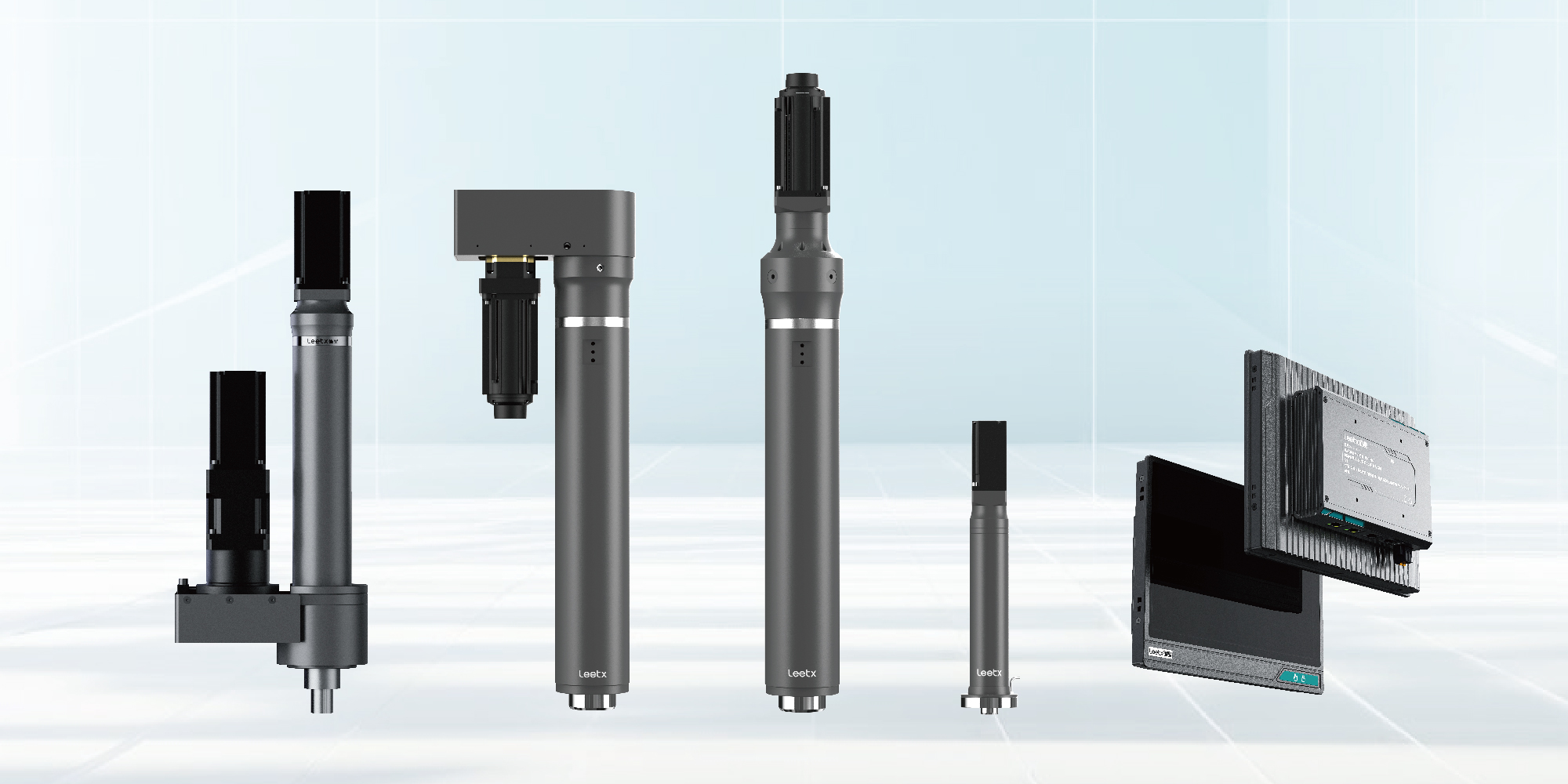
It is along this evolutionary path that integrated press‑fitting units are starting to attract more attention. EcoMove Smart Electric Cylinder offers a typical implementation of this approach. It integrates the mechanical body, servo drive, control module, pressure sensor, and visualization software into a single standardized press‑fitting unit — enabling system capability that no longer depends on on‑site piece‑by‑piece assembly.
For system integrators and end‑user plants, this shift brings three practical benefits:
- Easier deployment — no need to match drives, sensors, and control logic from scratch
- Clearer maintenance — modular structure simplifies replacement and troubleshooting
- Faster changeover — process parameters and programs can be reused and recalled directly
📊Smart Factories Require Hardware That Can Sense the Process
In IT and software systems, plug‑and‑play deployment, remote configuration, and version management have already become standard practice. On the shop floor, however, industrial hardware still relies heavily on manual setup and tuning.
Press‑fitting equipment is no longer just about executing motion — it also needs to understand the process behind it.
Press quality is not defined solely by final position or final force. Contact points, force rise curves, displacement changes, speed variations, inflection points, and press time together define the assembly state. Many issues do not appear in final inspection results — they emerge earlier in the curve behavior.
Without process data, decisions remain outcome‑based. With process data, engineers can trace back to the exact stage where an issue occurred.
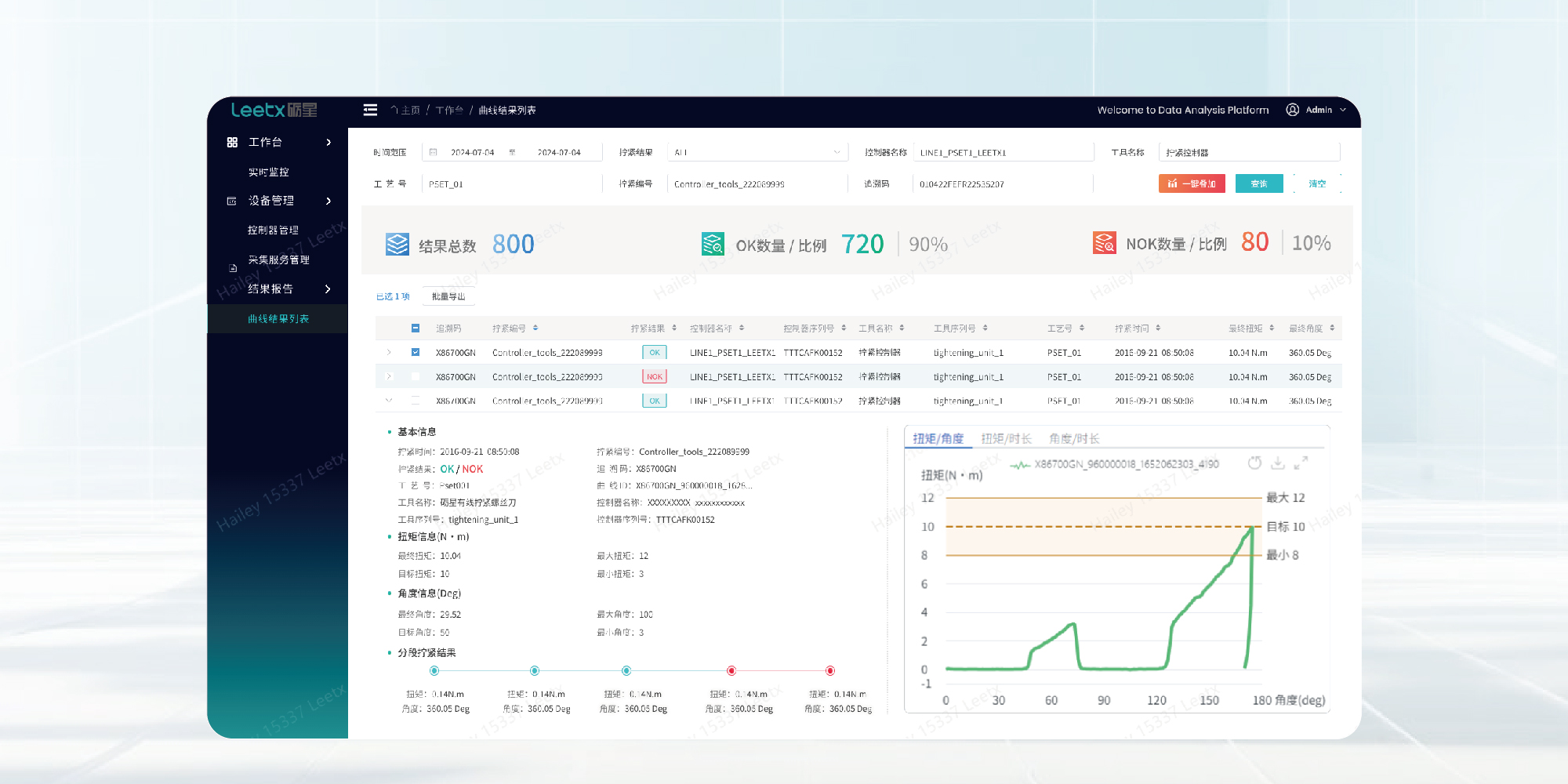
This is where the Acquisition and Evaluation System in the Servo Press‑Fitting System becomes essential. Built around Monitor, Analyze, and Trace, it enables real‑time process monitoring, quality evaluation, and full traceability of each press cycle through force‑displacement data acquisition.
In practical use, the system supports:
- Real‑time curve comparison for consistency evaluation
- Inflection point detection for process state changes
- Full‑stroke monitoring with phase‑based triggering
- Data logging and traceability for analysis and optimization
- Adaptive deceleration control to adjust approach speed based on part behavior, reducing force overshoot
⚡The system supports sampling frequencies up to 10 kHz, up to 500,000 curve feature points, and continuous real‑time data acquisition.
When production fluctuations occur, curve data allows issues to be traced step by step — whether it is material variation, early contact, resistance changes, or process window shifts. These signals often appear earlier than final results.
💻Software-Defined Hardware Ultimately Comes Down to Engineering Efficiency
Software‑defined hardware does not reduce the importance of hardware itself. Structural rigidity, transmission, sensing, and control capabilities still define the foundation of system performance. The shift is that software now plays a coordinating role, making systems easier to use, manage, and optimize.
Press‑fitting systems are evolving in this direction. They need faster integration into production lines, quicker changeovers, clearer process visibility, and less reliance on on‑site debugging. If these still depend heavily on manual on‑site work, flexibility becomes a burden rather than an advantage.
The value of integrated servo press‑fitting modules lies in transforming a press station from a one‑time engineering project into a repeatable, standardized unit. EcoMove follows this design logic by completing complex integration upstream, simplifying on‑site deployment, and enabling every press cycle to be validated through data.
For companies building smart factories, the evaluation criteria for press‑fitting equipment is also shifting. It is no longer defined only by force or speed, but increasingly by three dimensions: deployment efficiency, process interpretability, and data stability. When these conditions are met, press‑fitting evolves from a piece of equipment into a system capability.