
















How to Choose a Tightening System with Data Collection and Traceability
In automotive components, battery packs and precision electronics, tightening quality contributes directly to product reliability. As assembly lines become more automated, manufacturers expect tightening equipment to perform consistently and capture the process data needed for quality checks and traceability.
That data has a practical role throughout production. During acceptance reviews, teams need to check individual joint results. When a quality question arises, torque, angle and curve records help engineers examine the operation. After a process adjustment, production data provides a basis for comparing performance.
At Leetx, we bring process control and data acquisition together in our tightening systems. Controller records, workpiece identification and software analysis give engineers a clearer view of assembly. For manufacturers building or upgrading a line, the right configuration starts with how that information will be used.
What Data Should a Tightening System Record?
A useful tightening record identifies the operation and provides enough information to review it.
On an assembly with several fasteners, different joints may use different tools or programs. A product-level pass signal provides an overall status, while individual joint records show the operations behind it.
These records serve several people. Operators need immediate feedback. Quality teams need the history of a particular product. Process engineers need comparable data when investigating variation or adjusting a program.
Defining those uses early helps determine which fields and curves to retain. It also establishes how records should be organized, so the information remains accessible after the workpiece leaves the station.

Why Record Torque-Angle Curves as Well as Final Results?
Final torque and angle are central to tightening evaluation. Together with the configured limits, they indicate whether an operation met its process requirements.
A curve provides additional detail about how the joint reached that result. Engineers can examine rundown behaviour, torque development and differences between cycles performed under comparable conditions.
This is valuable when a final result alone does not explain a quality concern. Two operations may finish at similar values while following different paths. Reviewing their curves alongside the program and termination information gives engineers more evidence for deciding what to inspect next.
Evaluation limits should reflect a validated joint process. Curves can reveal deviations worth investigating, while checks of the components, tooling and assembly conditions help establish their cause.
Built-In Recording at the Controller
Automatic acquisition keeps record creation within the production sequence. The controller captures relevant information as the tool performs the operation.
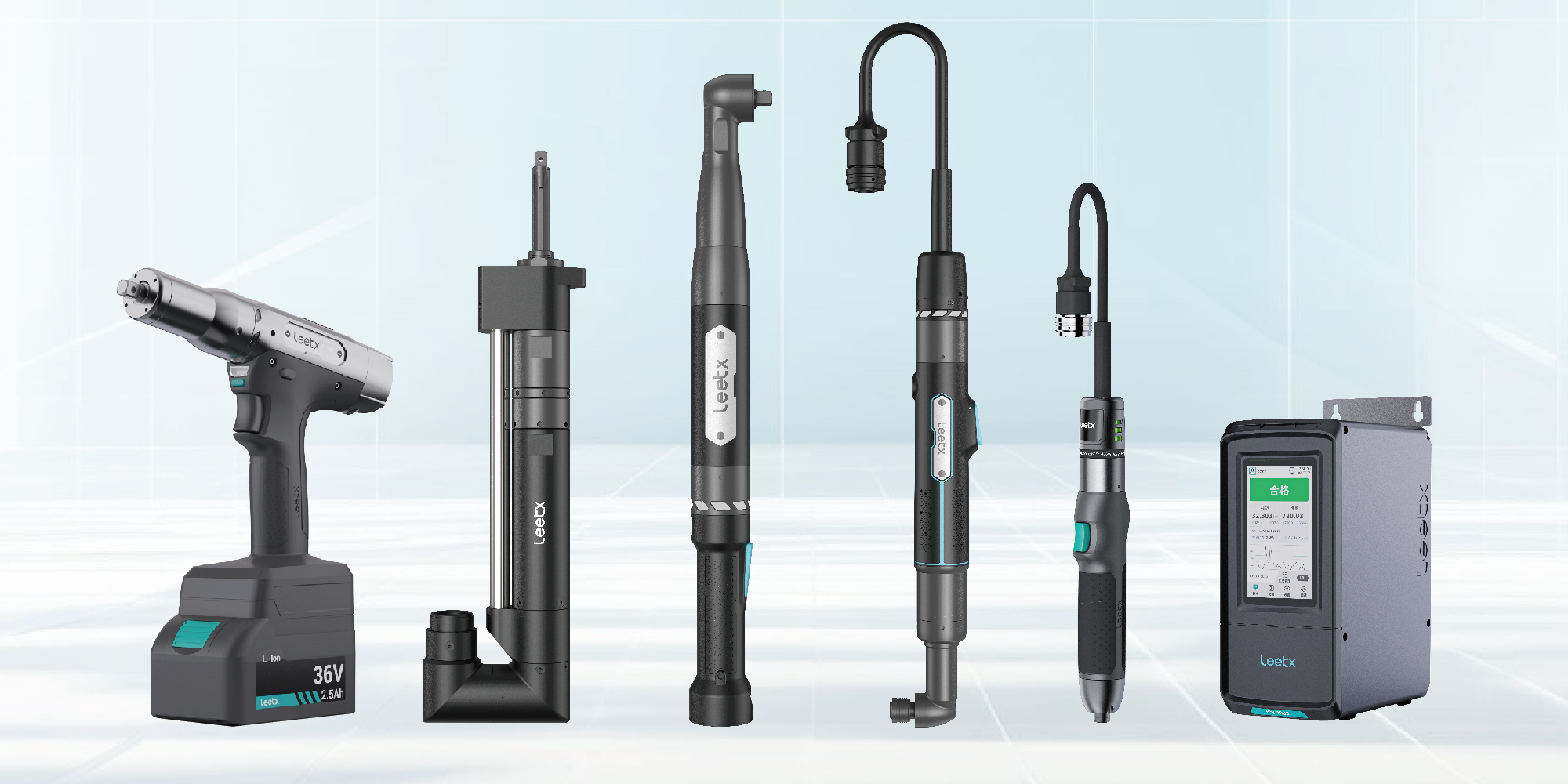
The Leetx TCS.2000 tightening controller combines process control, data collection and an operator interface. Result fields include date, time, tool information, program number, torque, angle and barcode. Tightening results can also be exported through USB.
Its stated data capacities include:
- 100,000 tightening results
- 30,000 tightening curves
- 1,000 Hz curve sampling
Result and curve capacities are separate specifications. A retention plan can use these figures to determine which curves to record and how frequently data should be transferred or archived.
Torque and angle monitoring, re-hit detection, seating-torque detection and termination information provide further context for reviewing an operation. Together, these functions make records available for routine checks and detailed investigations.

How Are Tightening Results Linked to a Workpiece?
Traceability depends on a clear association between the recorded operation and the assembled product.
A barcode, carrier identifier or serial number supplied by station controls can provide the workpiece identity. For a product with multiple fasteners, the record also needs to distinguish the joints through a position, spindle identifier or operation number.
A typical sequence is:
Identify the workpiece → execute the process → record the result → associate it with the joint → retain it for retrieval
The importance of linking identity with recorded events is also reflected in the GS1 Global Traceability Standard, which provides a broader framework for capturing, recording and sharing traceability information across supply chains. At the assembly station, the practical task is to preserve that relationship between the product and the operation.
The TCS.2000 provides a serial connection for a barcode scanner, with configurable barcode, program-selection and tool-start sources. These settings allow identification and process selection to be arranged around the station workflow.
The association should remain clear through product changes and repeat operations. If a joint requires rework, linking the original attempt with the subsequent operation gives the quality team a more complete assembly history.
Individual Joint Records in Multi-Spindle Stations
Automated stations may tighten several joints within one cycle. Production controls need an overall station status, while quality investigations may require the result from a particular spindle.
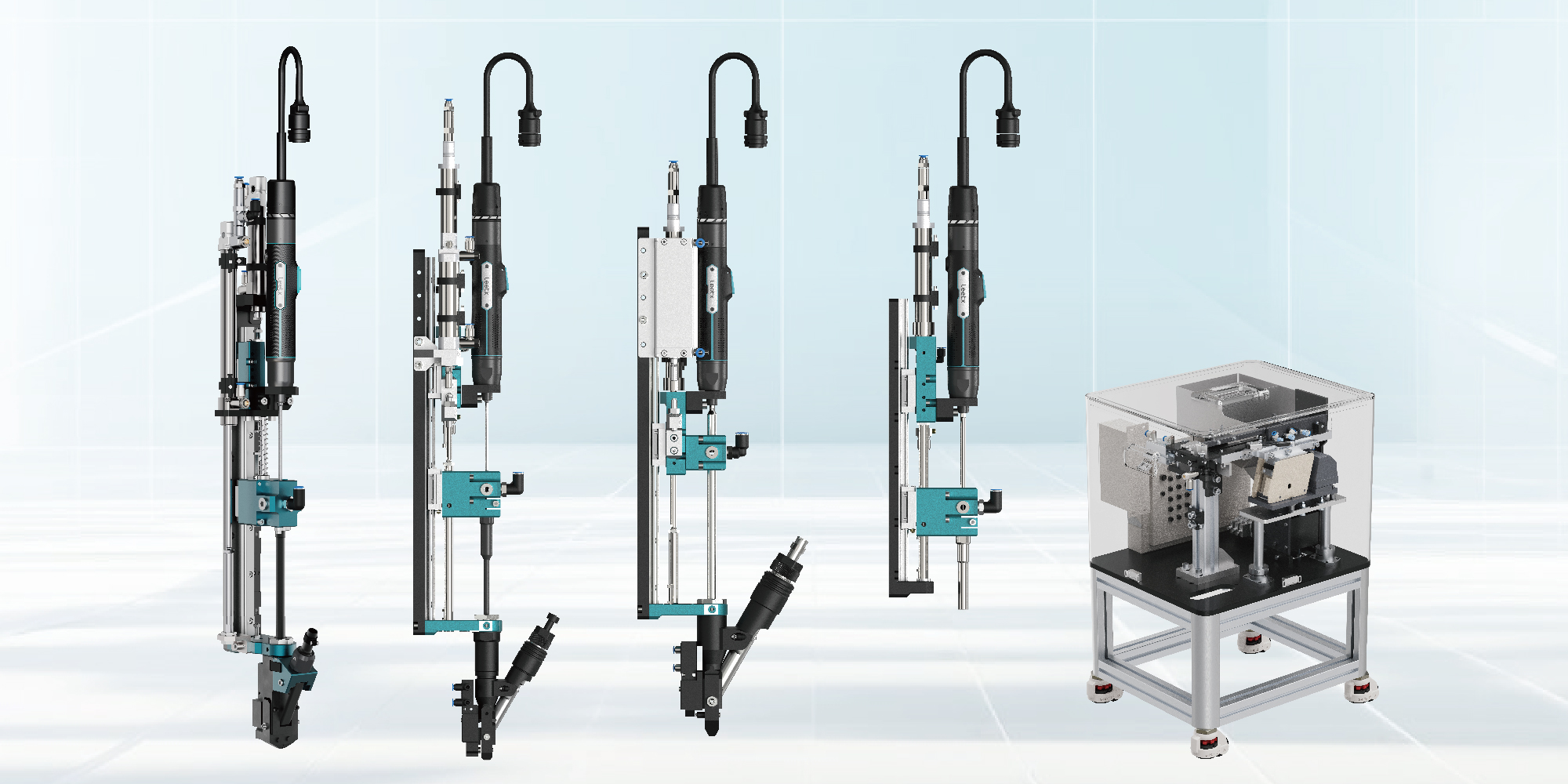
Leetx EFS multi-spindle configurations use a master-slave control arrangement with individual spindle status available in real time. During station design, spindle identifiers can be mapped to the corresponding joint positions.
Planning this relationship alongside the mechanical layout and control sequence makes later retrieval more straightforward. Engineers can move from the product record to the fastening position they need to examine.
What Does Built-In Data Collection Include?
Built-in acquisition allows a tightening system to generate records during normal operation. The full traceability arrangement may combine equipment, software and plant systems.
Tools and controllers perform the tightening process, record measurements and provide local status information. Depending on the model, they also offer storage, export and communication options.
Data software brings records together for monitoring, statistical analysis and visualization.
Station and plant systems may supply workpiece identity, manage production orders or retain information across multiple assembly processes.
A standalone station may use local viewing and file export. A multi-station operation may need automated collection and a common place for quality teams to review data.
When specifying the system, identify which functions are included in the equipment, which require software and which belong to integration work. This keeps the delivery scope aligned with the factory’s intended use of the records.
How Do Cordless Tools Handle Tightening Data?
Cordless tools provide flexibility where operators move around a workpiece or cables would restrict access. On-tool recording is an important part of managing data in these applications.
In the Leetx WCS.2000 cordless tightening system, EWP and EWA tools can each store up to 100,000 results and 10,000 curves. Data recorded during a disconnection is automatically retransmitted after reconnection. One controller can manage up to 10 cordless tools.
The station configuration brings together tool identity, workpiece identification, data reception and the agreed operating behaviour during a connection interruption.
NG locking and multiple barcode rules can be configured around failed-result handling and different product variants.
For the production team, the objective is a consistent record of the work performed: which product was assembled, which process was used and where the resulting data is retained. On-tool storage and reconnection handling contribute to that arrangement.

How Can Tightening Data Connect to an MES?
Manufacturers already using PLCs, an MES or quality management software need tightening equipment to fit their existing workflow.
Start by identifying who uses each type of information. Station controls may require status signals and program selection. Quality teams need workpiece and joint records. Process engineers may require curves for comparison.
TCS.2000 communication options include Ethernet, Web API, Open Protocol and logic I/O, with optional fieldbus support. Available interfaces and transmitted content depend on the selected version and configuration.
Integration connects those capabilities to the factory’s data model. It defines field mapping, identifier handling, data reception and the required transfer of curves.
The equipment configuration, station controls and receiving system should be tested as a complete flow. A record generated at the tool should arrive with the information needed for its intended use.
A factory without an MES can still establish a useful recording process through local storage, export and suitable software. The data arrangement can grow with the operation.
How Does Tightening Software Help Improve Process Visibility?
Finding the history of a particular workpiece is one use of tightening data. Reviewing records across production can also reveal changes that deserve attention.
Comparisons are most useful when records belong to comparable products and process conditions. Programs, tools and relevant production changes should be considered when grouping data.
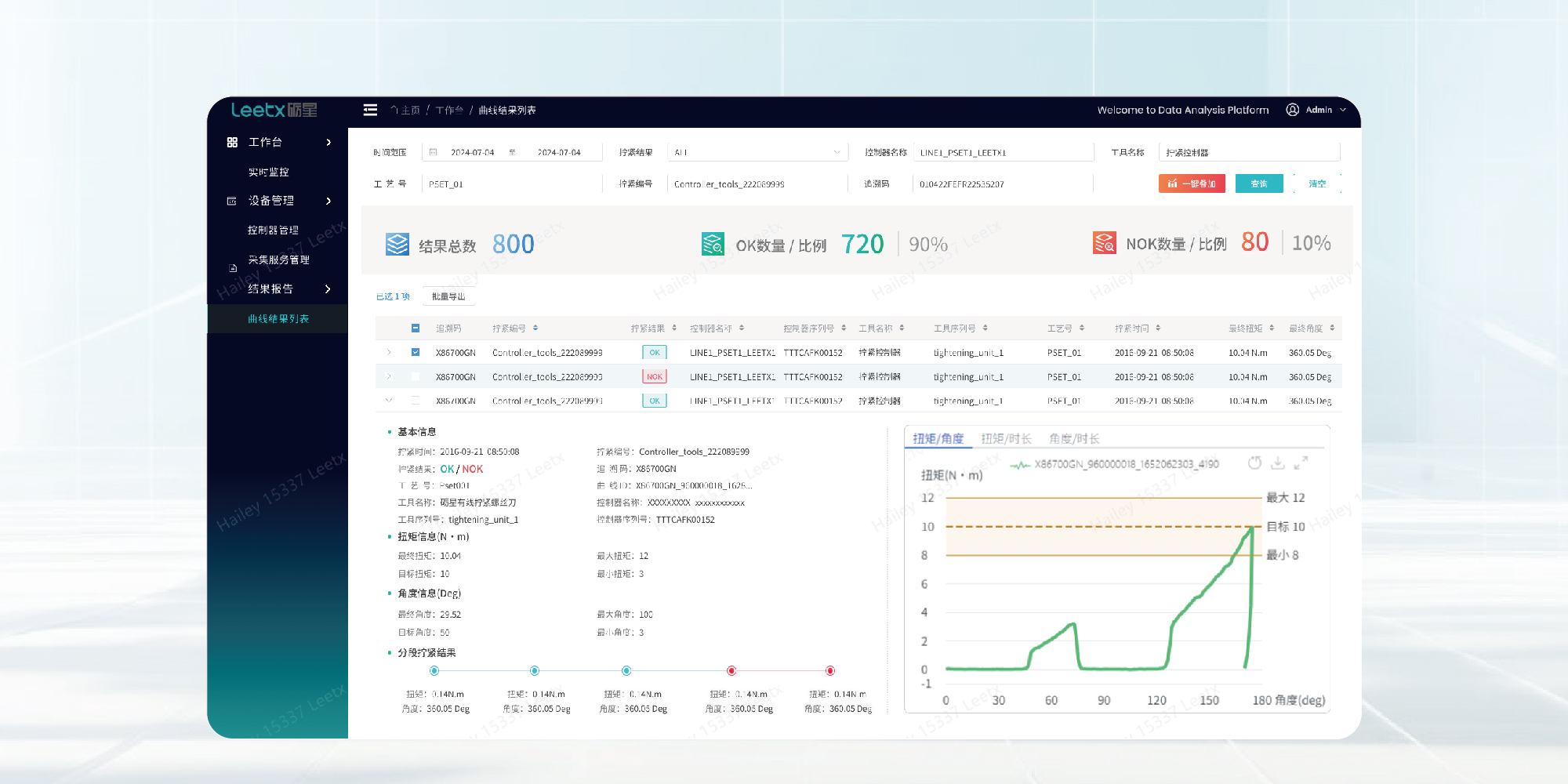
The Leetx Data Traceability System, presented on our website as the Smart Integrated Assembly Analysis System, provides real-time SPC, curve comparison, window analysis and NOK trend warnings.
Statistical Process Control
SPC helps teams examine changes in a monitored characteristic over a series of operations. Engineers can review these trends alongside information about process settings, tools and components.
For teams developing their statistical methods, the NIST/SEMATECH Engineering Statistics Handbook provides background on process control, production-process characterization and measurement. The analysis method should be chosen around the production question being investigated.
Curve Comparison and Window Analysis
Curve comparison makes differences in the recorded process easier to examine, particularly when engineers need to look beyond final torque and angle.
Window analysis directs attention to selected regions. Evaluation settings should correspond to the validated requirements of the joint.
Browser-Based Production Views
The system’s station monitor displays real-time tightening results and curves through a browser, without additional client software for that view.
Operators can review current information, while engineering and quality teams use analysis functions for their own tasks. NOK trend warnings draw attention to changes in rejected results that may warrant investigation.
The benefit comes from making information available in a usable form: a result to check, a curve to compare or a trend to investigate.
What Should You Verify Before Production Handover?
Consider a real quality request: if someone asks for the assembly history of a finished product, what should the team be able to provide?
Work backwards to define the required joint records, curves, identifiers and retention arrangements.
For a new line, these decisions can be made alongside mechanical, control and software design. For an existing station, review the records already available, then identify the connections or software functions needed.
Before handover, use representative workpieces to check the complete sequence:
- Identify the product and select the intended process.
- Complete the tightening operations.
- Confirm the association between the workpiece, joints and results.
- Retrieve the required records and curves.
- Check how repeat operations or rework appear in the history.
Wireless and multi-spindle applications can be included according to their operating procedures.
At Leetx, we approach tightening quality through precise process control and a clear view of the work performed. Tools, controllers and analysis need to work together around the assembly task. With the right configuration, records created on the line remain useful for acceptance reviews, troubleshooting and process improvement.

FAQ About Tightening Data Collection and Traceability
Q1: Is Local Controller Storage the Same as Manufacturing Traceability?
Local storage provides the results and curves used in traceability. Workpiece and joint identification connect those records to the product, while the configured software or plant system provides retention and retrieval. These functions work together to create an accessible assembly history.
Q2: Is a Barcode Scanner Required for Tightening Traceability?
A barcode scanner is a common identification method. Other approaches may use a carrier identifier or information supplied by station controls. The selected method should match the production flow and associate the identifier with the correct workpiece, joint and result.
Q3: Which Leetx Controllers Record Tightening Data Locally?
The TCS.2000 records results and curves for corded applications. In the WCS.2000 cordless system, EWP and EWA tools store results and curves on the tool and retransmit data after reconnection. Capacities and communication options depend on the selected configuration.
Q4: Will a Tightening System Integrate with an MES Out of the Box?
Leetx provides communication interfaces that form the basis for MES integration. The connection is configured around the controller, MES requirements and production workflow, including result fields, workpiece and joint identification, curve transfer where required, and complete-flow testing.