















Pick-and-Place Screw Feeding: The Handover From Presenter to Joint
At a glance: Pick-and-place screw feeding presents a single oriented screw at a fixed position, and the tool collects it, carries it to the joint and drives it. It is used where a screw cannot travel through a feed tube: short shanks, wide heads, nuts, and coated or appearance-sensitive fasteners that must not be blown through a hose. It costs cycle time, because the screw waits in a nest and the tool travels to it; it buys reliability on fasteners that would otherwise jam.
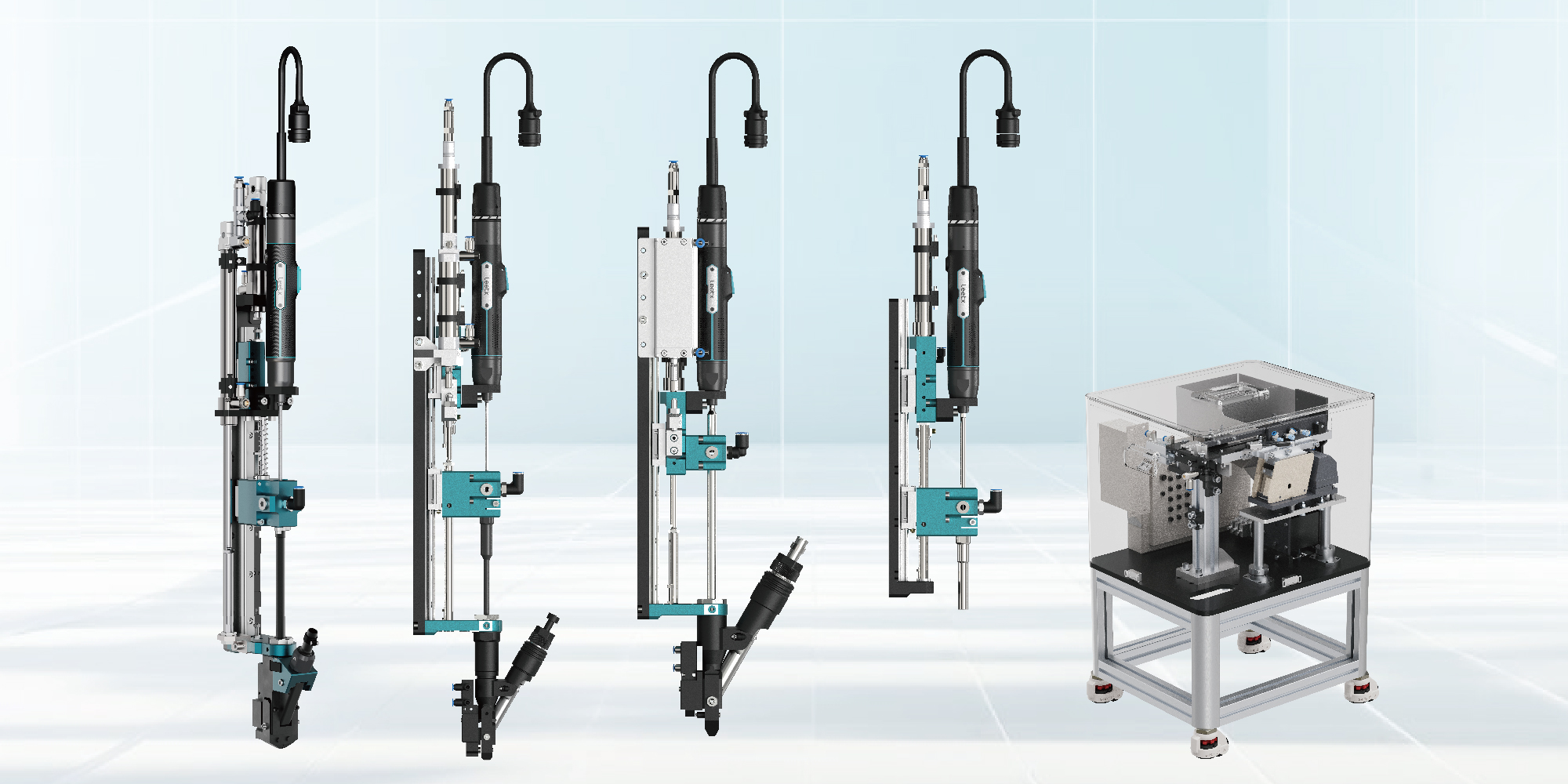
Leetx's APP vacuum pick-and-place module picks screws or nuts from a TF90 presenter, from a receiving table, or directly at the hopper cut-off, in internal-drive, external-drive and re-tightening versions. The APP-Q adds automatic head exchange for several screw types on one station, and the AHP and AHPQ modules provide the same pickup function for handheld tools.
This article follows the screw from the decision to pick it, through the three moments of the handover, to the release test on the station.
Three Routes for a Screw That Will Not Blow-Feed
A screw whose shank is short relative to its head has no stable orientation in a round tube. It tumbles, arrives sideways, and jams at the first bend. Leetx's feedability analysis catches this in two steps, the length-to-diameter ratio and the passing angle in the tube, as described in blow-feed screwdriving. When a screw fails both, there are three routes.
Change the screw. A longer shank or a smaller head restores the ratio. This is the cheapest route and the one least often available, because the fastener has usually passed design review before the feeding question is asked.
Use a profiled feed tube. A shaped tube can hold a marginal screw in orientation, at higher tube cost and with tighter tolerance demanded of the screw supplier. It does not help a screw that is far below the ratio, nor a nut.
Pick and place. The screw is oriented once, by the presenter, and never travels unsupported. The tool comes to it. This is the route for short screws, wide heads, nuts, and for fasteners whose surface would be marked by tube travel. The rest of this article is about doing it well.
What Pick-and-Place Changes, and What It Costs
Compared with blow feeding, pick-and-place changes four things in the station's favour:
- Surface protection. The screw is lifted by its head and carried; it does not strike tube walls at speed. Coated and anodised fasteners arrive as they left the feeder.
- Difficult geometry. Anything the presenter can orient, the tool can pick: short screws, flat wide heads, nuts, screws with large flanges.
- Positive confirmation. Vacuum detection on the APP confirms the screw is held before the tool moves, so a missed pick stops the sequence instead of producing an empty tightening.
- Flexibility. One module serves several screw types with a presenter per type and, on the APP-Q, an automatic head exchange.
And it costs two things, which the station design has to absorb:
- Cycle time. The screw waits in a nest; the tool travels to it and back. Blow feeding overlaps delivery with the previous tightening, pick-and-place cannot.
- Integration. The pickup position becomes part of the robot path, the presenter becomes part of the locating system, and the sequence needs a confirmed pick before every move.
Leetx reduces the first cost with the pickup source, covered next, and the second with the handover method covered after it.
Three Ways the Leetx APP Picks a Screw
The APP carries a vacuum head sized to the screw. Where it picks from decides how far the tool travels and how the bulk supply is arranged.
From a TF90 presenter
The presenter orients screws head-up in a track and offers one at a time at a fixed pick-up point. The TF90 covers M2–M6 screws under 25 mm in pick-up, scoop and counting versions, and sits close to the joints on a bench or inside a cell. This is the arrangement for small screws and for stations with one or two screw types.
From a receiving table
Screws are blow-fed from a remote feeder to a table beside the module and picked from there. The bulk supply stays out of the work area, the delivery to the table can overlap with the previous tightening, and the final handover is still a controlled pick. This suits screws that can be blown but cannot be fed into the head directly, and cells where the feeder has to sit away from the robot.
At the hopper cut-off
The module picks directly at the feeder's escapement, with no intermediate nest. Leetx recommends this for large screws, nuts and stations placing several fasteners, because it removes a transfer stage and shortens the pick cycle. The feeder itself has to sit within the tool's reach.
Internal- and external-drive versions use a bit or a socket at the head respectively; the re-tightening version is configured for second-pass tightening where the screw is already in place.

The Handover in Three Moments
Treat the presenter as part of the machine's locating system. Its relationship to the tool path has to stay the same after replenishment, adjustment and maintenance, and the handover is checked at three moments.
Before the pick. The intended screw is in the pocket, oriented, and the pocket is the one assigned to this fastening position. The presenter's own sensor confirms a screw is present; the station program confirms which pocket.
During the pick. The head descends onto the screw, vacuum lifts it by the head, and the head withdraws. The contact area between vacuum head and screw head, and the screw's position in the pocket, decide whether retention is reliable. A head that descends too far pushes the screw into the pocket; one that stops too high picks nothing. Vacuum detection confirms the result before any travel.
After the pick. The screw is held against the bit for travel, and the presenter prepares the next screw. Normal fastener variation belongs in the test: a repeatable robot position cannot compensate for a screw presented differently each cycle.
Keeping the Screw on the Head Through Robot Motion
Whether vacuum holds the screw during travel depends on holding geometry and movement, not on the presence of vacuum. Check contact area, leakage paths and tool orientation on the actual path. A stationary pickup demonstration does not reproduce acceleration, direction changes or an approach to an inclined joint.
Then continue the test to the joint. The tool has to align the screw for entry, drive it, and withdraw, and the vacuum head may need more clearance than the bit alone. For collaborative robots, total end-of-arm load, centre of gravity and reach are confirmed on the cell. The place of the module inside the complete station, with the feeder and the tightening controller, is covered in automatic screwdriving system components.

Several Screw Types on One Station
Several fasteners turn pickup into an assignment problem: the station has to connect the right screw, pickup position, head and tightening program to each fastening position, and similar-looking screws have to stay distinguishable by process, not by appearance.
With a presenter per screw type, the sequence can group fastenings by type to reduce head exchanges. Where the heads differ, the APP-Q with the QEAV quick-change base exchanges the head automatically; one configuration is listed for up to 7 screw types within an 8 mm outer-diameter limit. The exchange establishes the working-end configuration; which screw is waiting at each presenter is a separate verification. How changeover time is measured, in-cycle and between batches, is covered in quick-change screw feeding.
Placing the Presenter in the Cell
Place the presenter by reviewing the complete tool route: distance, approach direction, orientation changes and maintenance access. A presenter close to the first joint may be far from the last; a compact location may block workpiece loading; a convenient replenishment point may add tool travel on every cycle.
Compare layouts with the actual sequence, including return movements, and keep access for cleaning and recovery. A small reduction in travel is not worth a presenter that cannot be serviced. Where travel dominates the cycle, a receiving table or hopper cut-off pickup close to the joints is usually the better arrangement.

Release Checklist
Before the station is released, follow a screw through the whole path with production parts and the intended motion, not a single successful pick at the bench:
- The presenter delivers the intended screw, oriented, at the pickup point, across a production lot.
- The head picks and holds it through the full robot path, including the fastest and most inclined segments.
- The screw enters the joint and is driven, with the vacuum head clear of the workpiece throughout.
- After a deliberate stop, the machine establishes whether the tool already carries a screw before repeating the pick.
- A dropped or unavailable screw returns the station to a known condition by a defined procedure.
Leetx configures the APP or APP-Q module, the pickup source and the layout against the customer's screw samples and assembly drawings, and validates the handover on the actual fasteners. To review a pick-and-place application, share the screw samples, the joint positions and the intended tool motion with Leetx.
FAQ About Pick-and-Place Screw Feeding
Q1: Which Screws Need Pick-and-Place Rather Than Blow Feeding?
Screws that turn over in a tube: short shanks with wide heads, nuts, screws with large flanges, and any fastener whose surface must not be blown through a hose. Leetx's feedability analysis on ratio and passing angle sets the boundary for a specific fastener.
Q2: Is Pick-and-Place Slower Than Blow Feeding?
Per screw, usually yes: the screw waits in a nest and the tool travels to it. Picking at the hopper cut-off or from a receiving table close to the joints shortens the difference, and on fasteners that jam in a tube, pick-and-place is the faster station because it keeps running.
Q3: Can One Pick-and-Place Station Handle Several Screw Types?
Yes, with a presenter per screw type and, where the heads differ, the APP-Q with QEAV quick-change heads. The station still needs a defined check that the right screw, head and program are in use for each position.
Q4: Which Leetx Module Picks Screws From a Presenter?
The APP vacuum pick-and-place module, picking from the TF90 presenter, a receiving table or the hopper cut-off, in internal-drive, external-drive and re-tightening versions; the AHP and AHPQ modules give handheld tools the same function.