
1) Overview: Why “Tightening + Feeding” Matters Most in Final Assembly
Final assembly is the last stage of vehicle manufacturing, featuring many sequential stations and tight takt times. Any missing fastener, wrong fastener, or nonconforming tightening result typically leads to costly rework and can disrupt throughput and delivery. In practice, final assembly teams focus on four key outcomes:
Stable takt time: sustained, reliable output matters more than short bursts of peak speed
Consistent quality: fastening results must be repeatable and controlled, especially for critical joints
Safety and reliability: chassis, subframe and wheel-related joints are highly safety-sensitive
Process traceability: assembly data should be captured, analyzed and retained for quality records and continuous improvement
Leetx enables this with tightening systems and automatic screw feeding systems as the primary building blocks, while servo press-fitting can be used as a secondary process capability for selected stations.
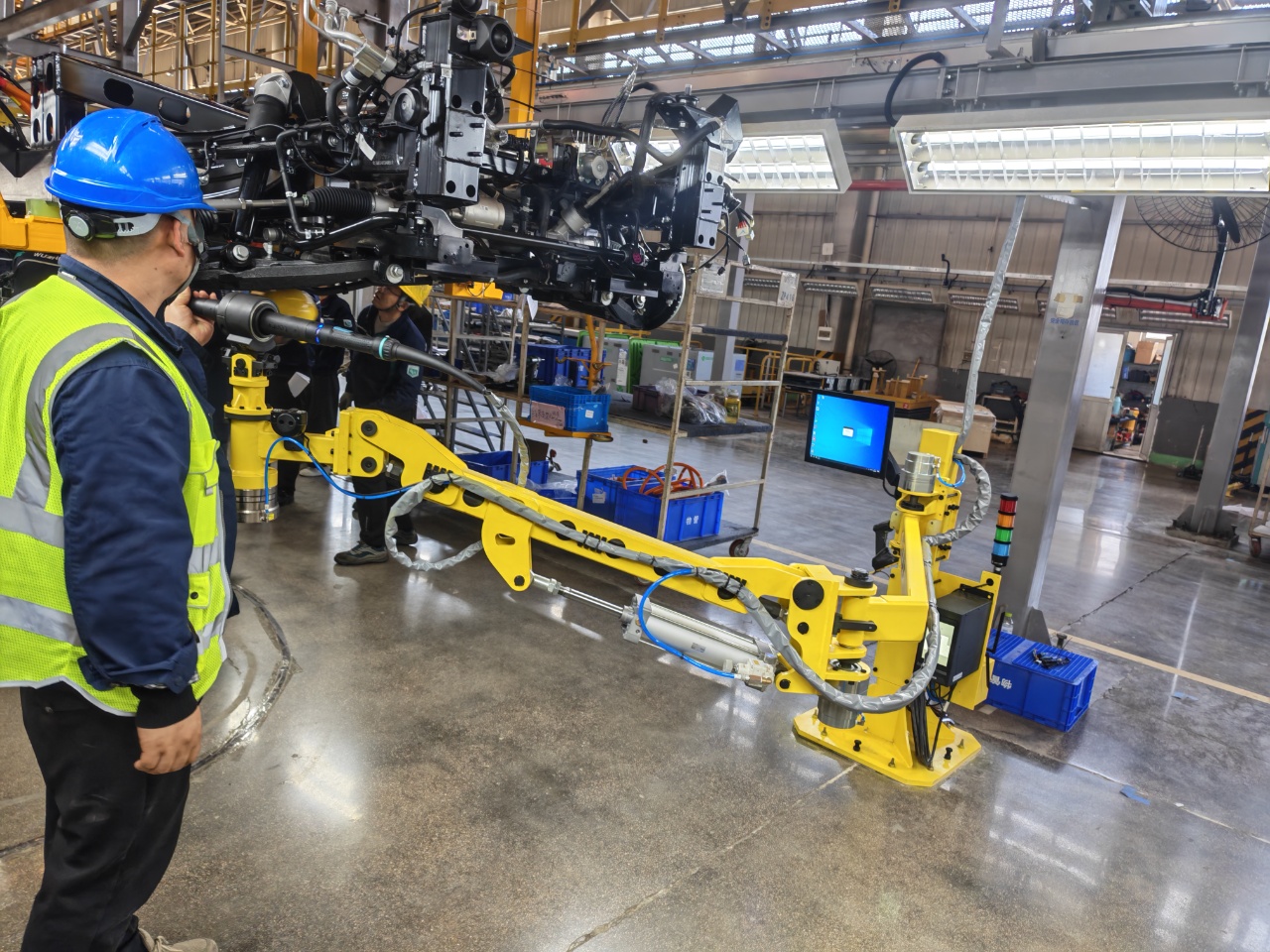
2) Typical Stations & How Leetx Is Applied (Application Breakdown)
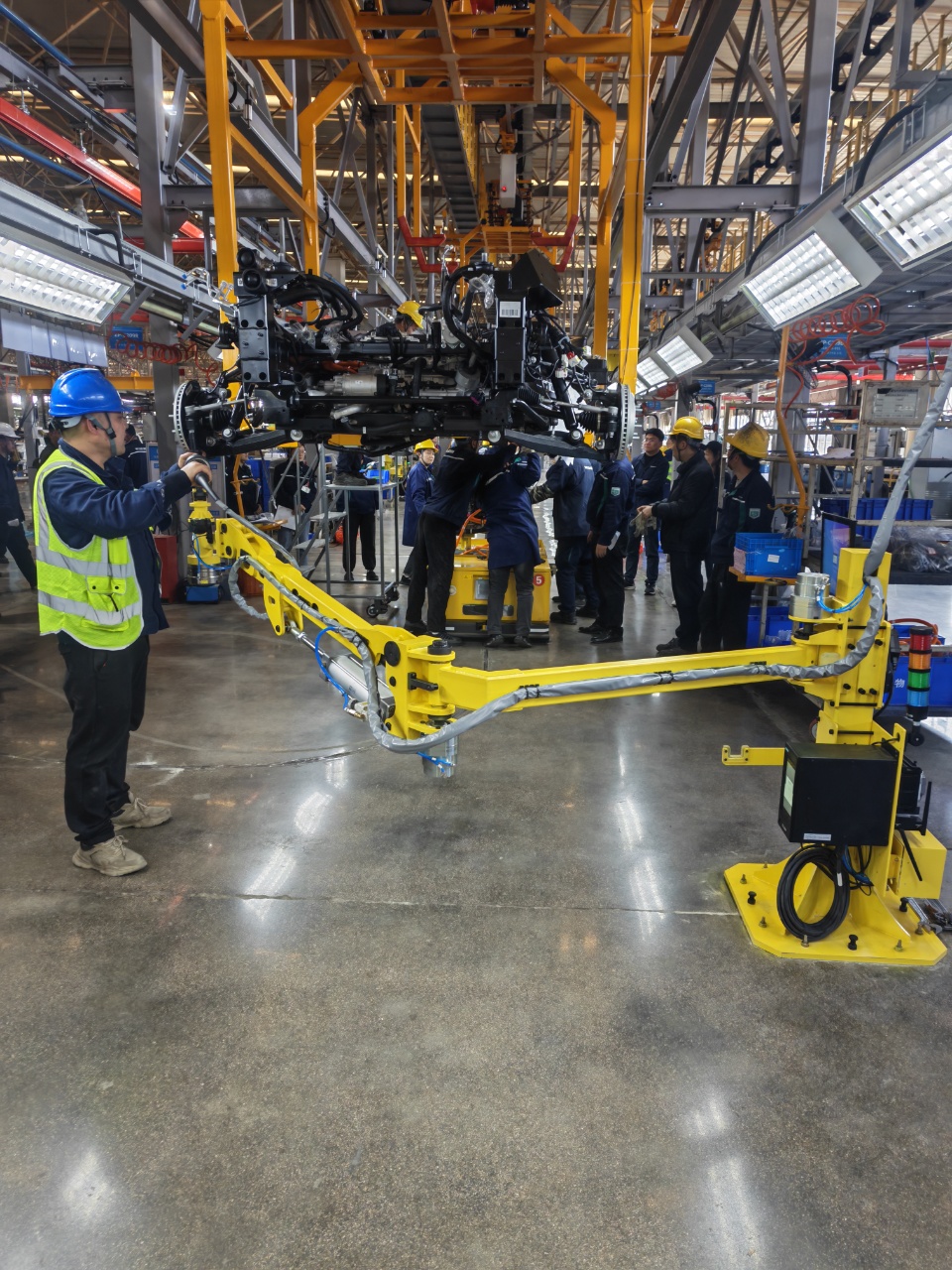
A) Chassis & Wheel-Related Tightening
Typical tasks: wheel/nut tightening and safety-related chassis joints. These stations are usually high-risk, high-visibility and frequently audited, while also being high-cycle with strong takt constraints.
How Leetx is applied:
Complete station configuration
A tightening station can be formed with:
tightening controller + tightening tool as the core execution and control units
supporting accessories such as cables and reaction arms
This station-level approach is designed for reliability in continuous, high-cycle operation.
Higher consistency & productivity (optional multi-point strategy)
When multiple fastening points are required within a single station, multi-spindle/multi-point approaches can be adopted to improve overall takt performance and reduce operator-to-operator variability.
Traceability and quality record retention
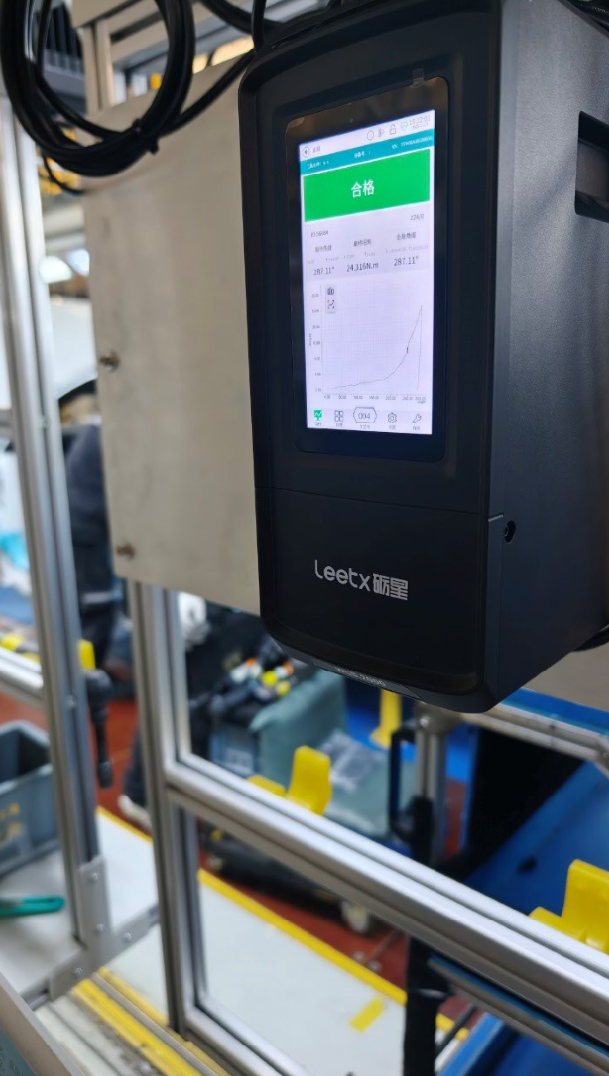
With data collection and analytics software capabilities, tightening processes can be monitored and recorded to support quality record keeping, process review and trend detection—enabling more effective corrective actions.
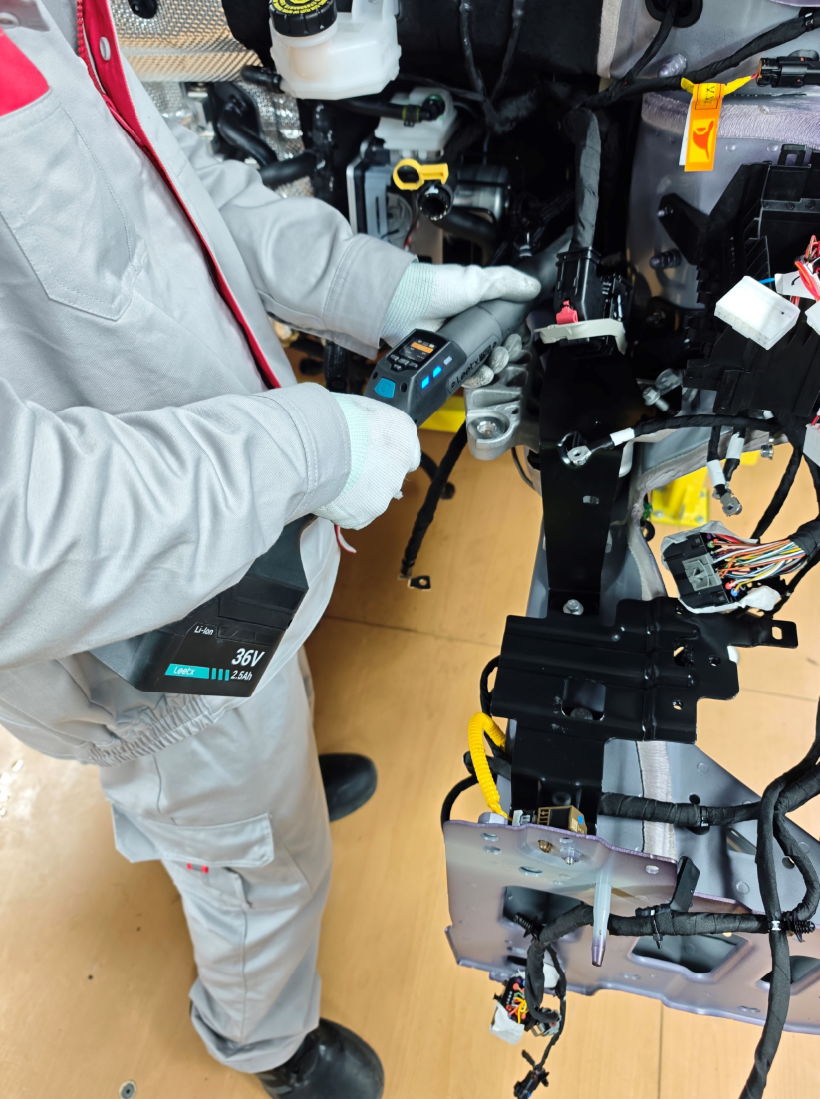
B) Powertrain / Module Tightening (Engine, Transmission, Steering, Subframe)
Typical tasks: multi-bolt fastening for engine, transmission, steering, chassis and subframe-related assemblies. Key challenges typically include a high number of bolts, strict process requirements, and a high cost of errors—often requiring stronger process documentation.
How Leetx is applied:
Flexible automation levels: solutions can be deployed from manual to semi-automatic and fully automatic tightening, supporting different budgets, takt requirements and ramp-up phases.
Focus on sustained precision: final assembly values precise and reliable output over continuous operation more than short-term peak speed.
Data-driven process control: real-time monitoring and recorded process information support earlier detection of abnormal patterns and reduce batch risks.
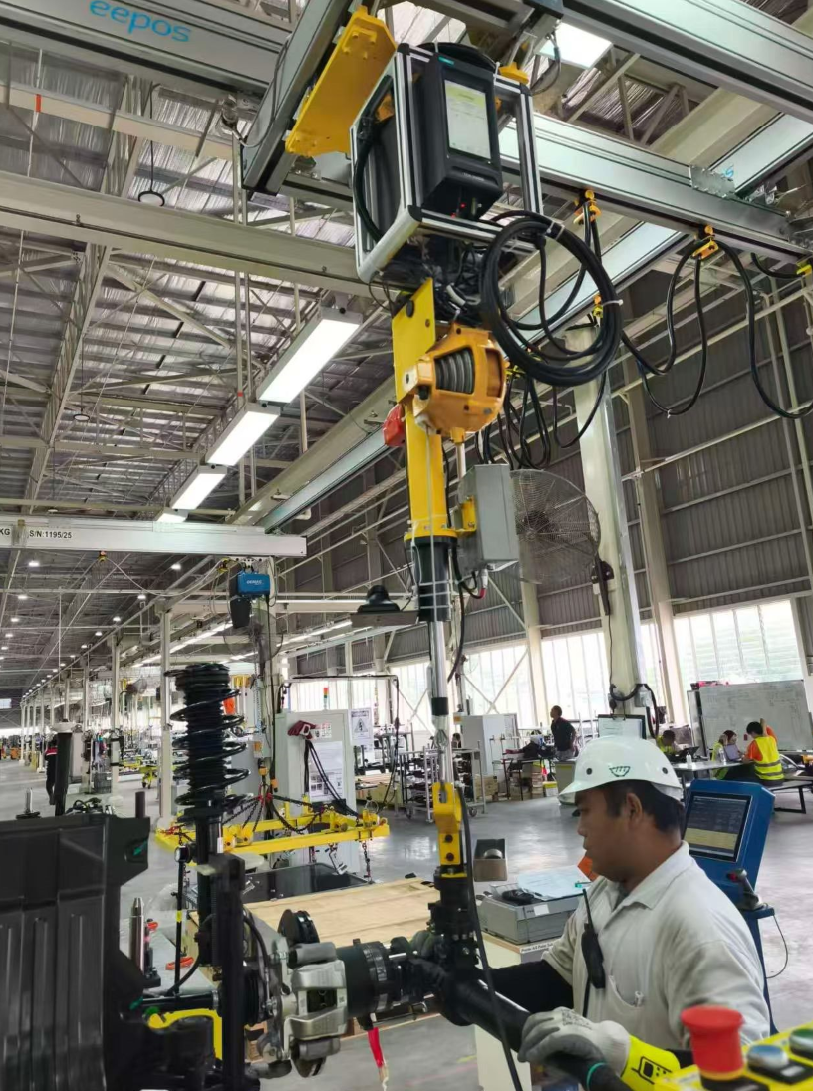
C) Interior & Electrical Assembly — High-Frequency Fastening (Where Feeding Creates the Biggest Impact)
Typical tasks: instrument panels, seats, trims, brackets and various electrical installations. These stations often involve high-frequency fastening with many screw variants, where manual picking and positioning become a major takt-time bottleneck and increase error risks.
How Leetx is applied (tightening + feeding synergy):
Automatic feeding to protect takt time
Automatic screw feeding reduces non-value-added manual motions (searching, picking, aligning), shifting station performance from “operator dependency” to “system dependency,” which improves consistency and lowers human error risks.
Multiple feeding and pick-up concepts for different station layouts
For constrained spaces and complex postures in final assembly, different pick-up and delivery concepts (e.g., vacuum pick-up and Pick & Place) can be configured to match screw types, installation directions and fixture accessibility. Final selection should be validated based on screw characteristics, feed stability and reachability.
Feed stability optimization
Feeding stability can be improved through appropriate feeder configurations and accessory modules (e.g., separation, cleaning, auxiliary mechanisms), helping reduce jams and stoppages that could lead to downtime.

