
1) Industry context: Why automotive components manufacturing needs “tightening + feeding” the most
Automotive components assembly—primarily at Tier 1 suppliers—typically combines high mix, high volume, and long-run mass production. A large portion of functional and structural joints relies on bolts and screws to achieve retention, sealing, and positioning. Any missing fastener, wrong fastener, or nonconforming tightening result can lead to rework and significant quality risk.
For most components manufacturers, assembly-system requirements usually converge on three priorities:
Stable takt time: reduce non-value-added manual actions such as searching for screws, picking, and aligning, and shift takt-time variability from the operator to the system.
Consistent quality: deliver stable, controllable tightening results over continuous production, rather than relying on short-lived peak speed.
Process traceability: ensure that process records for critical joints can be stored and analyzed to support quality audits and closed-loop problem solving.
Leetx builds assembly units around tightening systems and automatic screw feeding systems, and supports a closed-loop approach that connects assembly data acquisition, quality traceability, and process optimization—matching the strong production-consistency and traceability needs in the automotive components sector.
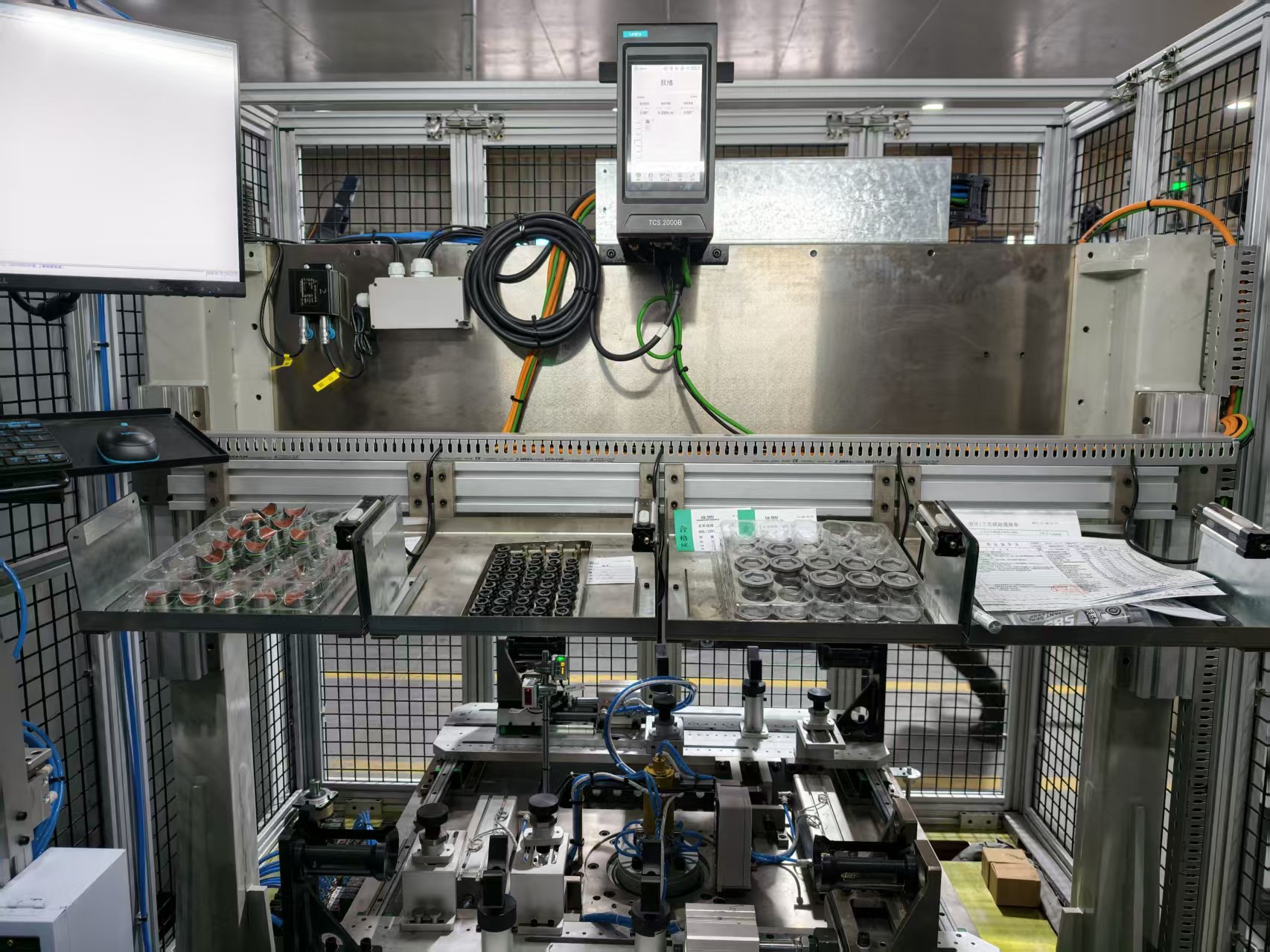
2) Typical parts and stations (structured around common joint types on components assembly lines)
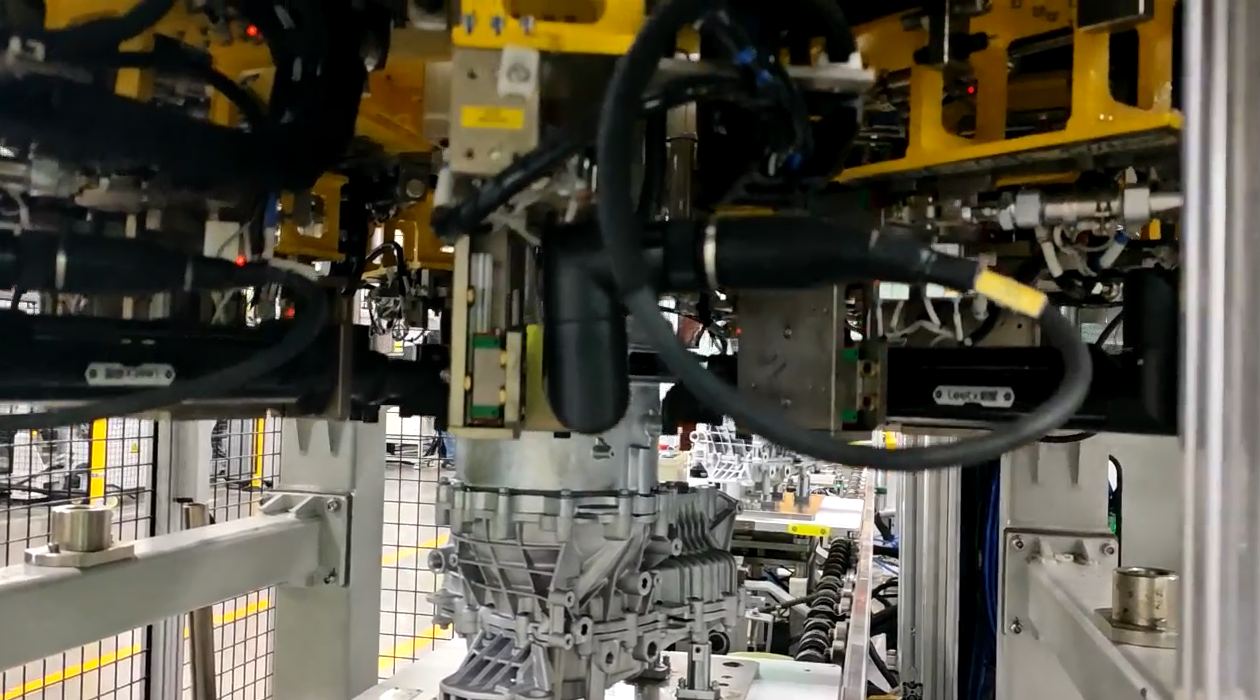
A) Structure- and safety-relevant joints: chassis / (sub)frame / wheel-related connections (tightening-centric)
These joints are safety- and reliability-critical tightening applications, typically requiring higher standards for consistency, process control, and long-term stability in continuous operation.
How Leetx is applied:
Station-level modular configuration: a complete station is built around the tightening controller + tightening tool, supported by station accessories such as cables and reaction arms, helping maintain stable performance on high-cycle production lines.
Traceability and process records: controller and software capability help ensure the assembly process is executed accurately and completely, enabling process analysis and retention of quality records for critical joint traceability.
Multi-point coordination (optional): where multi-point tightening or higher consistency is required, a multi-spindle tightening system approach can be used to improve both efficiency and consistency while reducing variability caused by operator differences.
B) Multi-bolt modules: engine / transmission / steering-related assemblies (from manual to fully automated roll-out)
Modules such as engines, transmissions, and steering assemblies commonly involve multi-bolt joints. Execution must be standardized and auditable, and there is often a stronger demand for “process evidence” through recorded data.
How Leetx is applied:
Flexible automation-level matching: solutions can be deployed as manual, semi-automatic, or fully automatic tightening, allowing customers to upgrade progressively from pilot builds and small batches through SOP mass production based on takt requirements and capex strategy.
Mass-production philosophy fit: the focus is on precise and reliable output sustained over continuous operation, aligning with long-hour, high-cycle components production rather than short-term peak performance.
Process-proven compliance: by recording and analyzing process data, manufacturers can move from “result-only acceptance” to “process-proven compliance,” strengthening quality systems and supporting closed-loop corrective actions.
C) High-frequency small screw stations: housings, brackets, covers, sensor fastening (feeding impact is highest)
Many components stations involve low torque, high frequency, and multiple screw variants. Manual picking, searching, and alignment not only consumes takt time but also increases the risk of wrong screw selection, missing screws, and mixed parts.
How Leetx is applied (feeding + tightening synergy):
Automatic feeding to reduce non-value-added work: automatic screw feeding systematizes screw presentation and delivery, reducing dependence on operator skill, improving takt stability, and lowering missing/wrong fastener risk.
Modular tightening / pick-up concepts: configurations can be selected based on station layout and handling method, including options such as standard tightening modules, vacuum tightening modules, Pick & Place tightening modules, and quick-change vacuum Pick & Place modules, helping adapt to different postures, space constraints, and fixture conditions.
Feeding mechanisms and accessories as a configurable set: bowl feeders, step feeders, hoppers, and accessories such as distributors, cleaners, Pick & Place screw presenters, and screw brakes can be combined to improve feeding stability and takt performance. Final selection is recommended to be validated through feedability analysis based on screw characteristics and fixture constraints.

