
















What Makes a Servo Press Well Suited to Precision Press-Fit Assembly?
The appeal of a servo press in precision assembly is the control it gives engineers over the pressing operation. Force, position and speed can be considered together, while process records show how each cycle performed.
For manufacturers assembling bearings, bushings, pins and similar components, this connects equipment capability with everyday production needs: setting up the right motion, maintaining a repeatable process and reviewing results when something changes.
Leetx’s servo press and process evaluation solutions bring these capabilities together. Their value becomes clearest when each is matched to a specific assembly requirement.
Controlling Force and Position Throughout the Press-Fit
Force and position describe different aspects of a press-fit operation. Force indicates the resistance encountered during assembly, while position indicates how far the press has moved.
The relationship between them matters. Reaching a specified position answers one question; understanding the force required to reach it answers another. Depending on the joint, both may form part of the acceptance criteria.
Servo control allows the pressing motion to follow a defined program using feedback from the system. Engineers can develop the operation around the required movement and completion conditions, then assess the result against the product requirements.
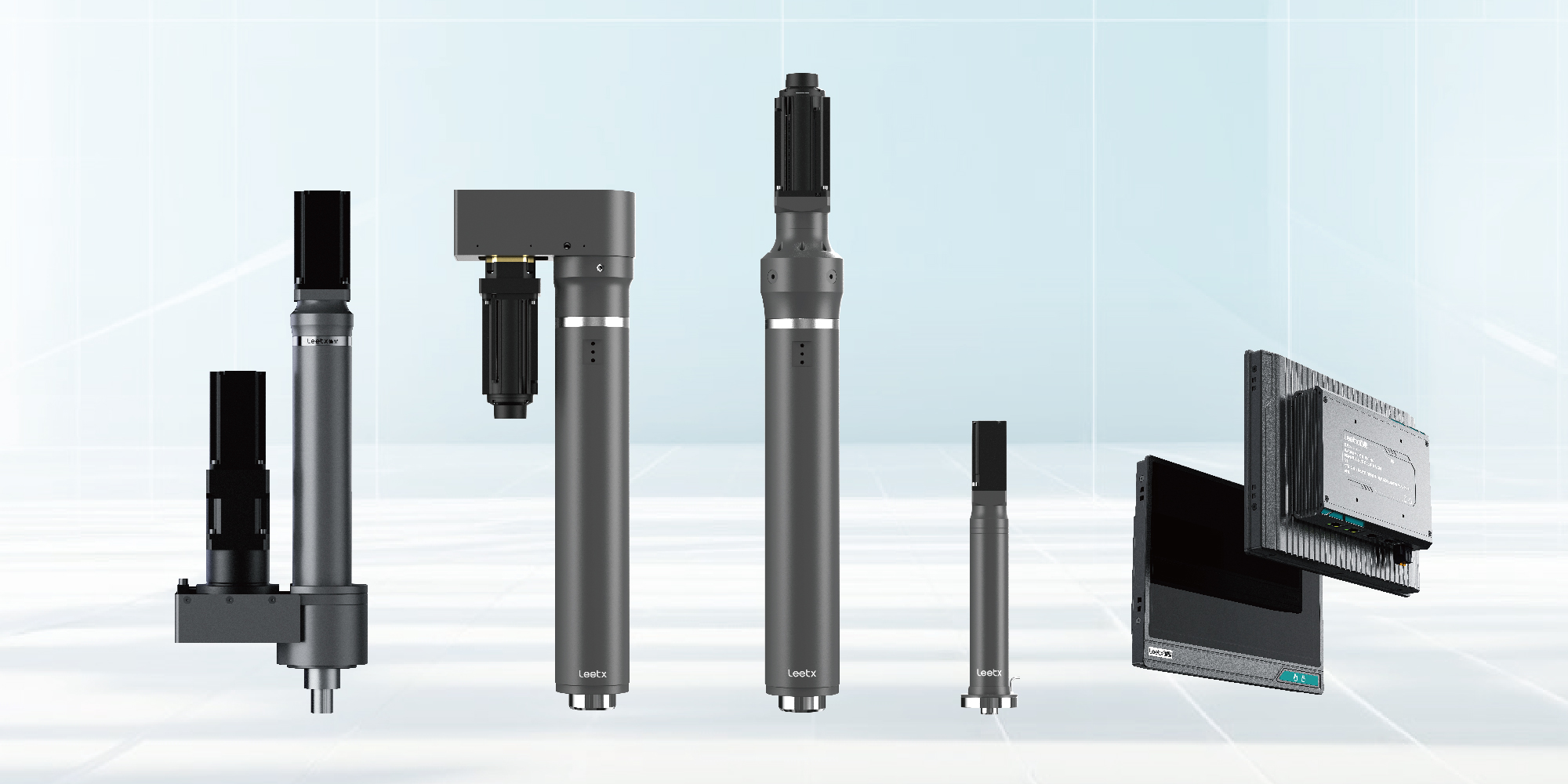
Our AEPS servo press system combines closed-loop control with force and position measurement. The series covers 2–500 kN, allowing configurations to be matched to different assembly requirements.
Matching the Press to the Working Range
Maximum force is an important specification, but the normal working range deserves equal attention. The selected press and measurement arrangement should suit the forces that matter during the actual assembly.
For example, a process may need sufficient capacity to complete the joint while also distinguishing changes within a lower-force portion of the stroke. Reviewing that working range helps engineers choose a configuration that fits the process.
Position requirements also need to be considered in the complete station. Tooling, fixture support and workpiece dimensions affect the relationship between press movement and the finished assembly. Sample validation brings those elements together.

Adapting the Motion to the Assembly Process
A press-fit cycle contains several movements, each with a different purpose. Programmable motion allows engineers to develop those stages around the component and the required production sequence.
The approach movement and the working stroke may need different speeds. Some processes may also require a holding stage or a defined transition near completion.
During process development, engineers can adjust the relevant settings and compare the resulting behaviour. Once validated, the program becomes part of the documented production setup.
Balancing Cycle Time and Process Control
The fastest available movement is not necessarily the most useful setting throughout the stroke.
A station may benefit from efficient approach and return movements while using a different speed during engagement or insertion. The appropriate balance depends on the component, fit and required production cycle.
Consider a bushing that must enter a housing and finish at a specified depth. Engineers need to account for the approach distance, insertion stroke and space required for withdrawal and unloading. Evaluating the complete movement makes cycle-time discussions more meaningful than looking at maximum press speed alone.
For products with different assembly requirements, programmable settings can also help organise the process. Each approved setup should remain associated with the correct part and tooling configuration.
Checking the Process Behind the Finished Joint
A completed joint provides a result. Process monitoring adds information about how that result was achieved.
Force–displacement monitoring records how measured force changes as the press moves. Engineers can examine relevant stages of the stroke, compare cycles and evaluate whether the process met defined conditions.
This is particularly useful when final readings alone do not cover all the assembly requirements. Two cycles may reach similar endpoints while differing during insertion. A curve provides the additional detail needed to examine that difference.
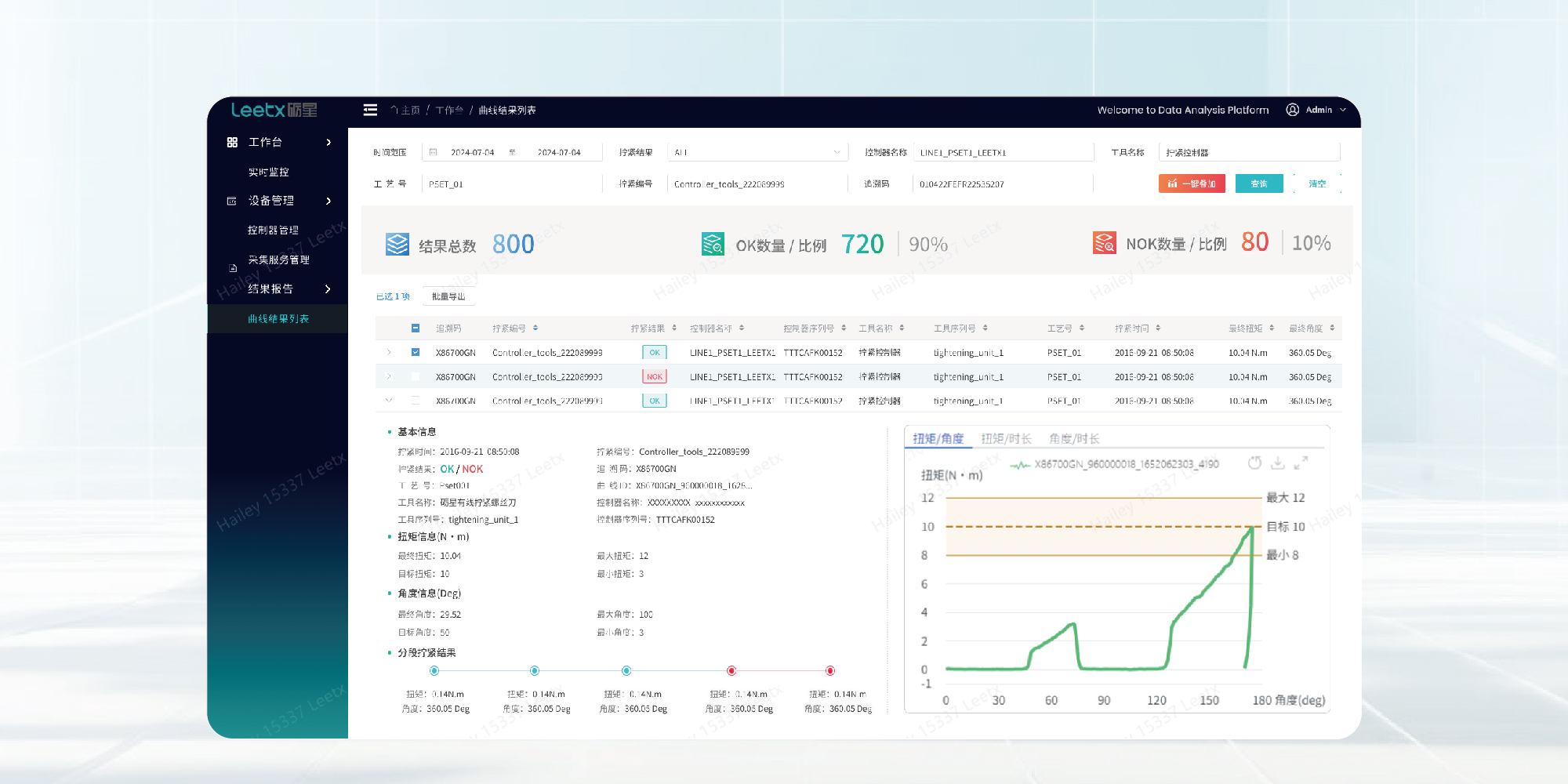
Leetx’s press-fit process monitoring software includes curve comparison, evaluation windows and inflection-point detection. These functions help engineers focus on the portions of the process that are meaningful for the application.
Turning Curve Data into Useful Quality Checks
A monitoring rule should answer a specific question about the assembly.
If a product requires a defined insertion depth and an allowable force range during part of the stroke, those requirements can be evaluated separately. One check addresses the endpoint; another examines the relevant force–displacement region.
A reference curve can help compare process shapes, while evaluation windows apply conditions to selected regions. The limits need to be established through product requirements and validation, including representative production variation.
When a curve changes, it also gives the engineering team a starting point for investigation. The location of the change can guide checks of the component, tooling, alignment or process settings. Physical inspection establishes the cause.

Supporting Consistent Production with Repeatable Setups
Consistency depends on more than repeating the same commanded movement. The press, measurement system, tooling and workpiece presentation all contribute to the result.
A servo press provides a way to define and reproduce the programmed portion of the operation. Keeping the program, reference settings and monitoring criteria under control makes it easier to maintain a known process and investigate changes.
Equipment specifications help establish the starting point. AEPS specifies 0.01 mm repeatability, with an optional external displacement sensor for configurations reaching 0.002 mm. Finished assembly dimensions should then be assessed using the actual fixture, tooling and components. AEPS specifications
Repeatability, measurement accuracy and resolution describe different properties. NIST’s measurement terminologydistinguishes these concepts, which is useful when reviewing equipment data against an assembly requirement.
For production teams, the practical outcome is a clearly defined setup:
- The program assigned to the part.
- The method used to locate and support the workpiece.
- The reference settings used for measurement.
- The conditions that determine acceptance.
Together, these details make the process easier to reproduce and hand over between engineering and production.
Making Production Records Useful for Quality Review
Process data becomes more useful when it can be retrieved with the context needed to interpret it.
The recording arrangement should reflect how the production and quality teams will use the information. A routine review may need summary results, while an investigation into a particular assembly may require its curve and program details.
Our press-fit evaluation software combines process monitoring with analysis and parameter-management functions. Workpiece identification, retention and retrieval should be defined as part of the project’s wider data flow.
When the required details are linked, engineers can review a result against the conditions used to produce it. This gives process records a practical role in production follow-up.
Bringing Servo Press Capability into the Assembly Station
The benefits of a servo press depend on how it is integrated with the rest of the station.
The fixture must locate and support the workpiece appropriately. The tool needs a suitable approach path, and the machine structure must accommodate the pressing load. Loading, unloading and maintenance access also need space.
The AEPS range includes inline and right-angle configurations to suit different layouts. These options can be considered while the station is being designed, alongside the required stroke and tool arrangement.
Controls need the same early attention. The station should select the correct program, coordinate the pressing sequence and handle the result according to the agreed production logic.
For an automated line, this means considering the press as part of a complete cycle. Workpiece arrival, identification, clamping, pressing, evaluation and release need to operate in the intended order. Clear coordination makes the equipment easier to commission and the production sequence easier to understand.
Confirming the Benefits with Actual Parts
An application trial turns the benefits of servo pressing into questions that can be checked against actual components:
- Does the assembly meet its requirements?
Compare the final dimensions and other required product checks with the recorded process results. - Does the process accommodate representative part variation?
Include relevant dimensional or batch variation where practical, rather than relying on a single sample condition. - Do the monitoring criteria serve their intended purpose?
Check that the selected limits correspond to product requirements and that the results can be interpreted clearly. - Does the complete operation fit production needs?
Include loading, positioning, pressing, evaluation and unloading when assessing the station cycle.
NIST’s guidance on experimental design begins with objectives, then considers variables and test design. The same approach helps structure an assembly trial: establish what needs to be demonstrated before choosing the conditions.
Keep the tooling details, program settings, position reference and evaluation criteria with the trial results. These records explain how the configuration was established and provide a useful basis for production handover.
For a precision press-fit application, the case for a servo press is strongest when its capabilities answer specific production needs. Programmable motion gives engineers control over the operation; force and position feedback help evaluate it; process records make the result available for review.
These are the capabilities we bring together in our servo press systems. The right configuration is the one that demonstrates their value on the customer’s parts, within the conditions the production team will use.

FAQ About Servo Presses for Precision Press-Fit Assembly
Q1: When Is a Servo Press Worth Considering for Press-Fit Assembly?
A servo press is worth considering when the application needs programmable motion, force and position feedback, or documented process evaluation. Its value is especially relevant when these requirements must be managed together within a repeatable production cycle.
Q2: What Is the Benefit of Monitoring Both Force and Position?
Position shows how far the operation has progressed, while force shows the resistance encountered. Evaluating them together helps engineers assess selected stages of the press-fit, rather than relying only on an endpoint reading.
Q3: Can Programmable Motion Help Shorten a Press-Fit Cycle?
It can help engineers adjust approach, working and return movements to suit the task. Any cycle-time improvement depends on the complete station, including handling and positioning, and should be demonstrated without compromising the validated assembly requirements.
Q4: Does Higher Press Capacity Mean Better Precision?
Higher capacity describes the available force, not the precision of the complete assembly. The working force range, measurement performance, position control, tooling and fixture arrangement all need to suit the application.
Q5: What Should a Manufacturer Prepare for a Servo Press Application Trial?
Manufacturers should prepare representative parts, drawings, fit and tolerance information, acceptance requirements and the target cycle time. For parts requiring precise alignment, dedicated tooling must also be provided. Existing force or displacement data can help define the trial and the configuration to be evaluated.