
















Automatic Screw Feeding for Electronics Assembly: Delivering Small Screws to Recessed Holes
In electronics assembly, a screw can feed without trouble on the supplier's bench and still fail on the line. The reasons are usually the same two. The screws are short and wide, so they turn over easily on the way to the tool. And the holes sit deep inside a housing, next to walls, ribs and connectors, so the tool cannot always get to them.
Automatic screw feeding for electronics assembly therefore has to get three handovers right: the feeder hands over a correctly oriented screw, the tool keeps hold of it on the way, and the screw enters the hole straight. A problem at any one of them looks the same from outside: a missing or tilted screw.
This article takes the three handovers in order and shows what decides each one and how to test it.
The Three Handovers at a Glance
Handover 1: Can a Small Screw Feeder Orient the Screw Every Time?
A long screw has a natural direction in a tube. A short screw with a wide head does not: it can tumble and arrive sideways. This is why many electronics screws cannot simply be blown through a hose.
The usual first check is the ratio of screw length to head diameter. A screw is a candidate for blow feeding when its length is at least about 1.2 times the largest head diameter, or the washer diameter on a combination screw. An M3 pan-head screw 4 mm long, with a 5.6 mm head, comes to about 0.7 and does not pass. The details are in blow-feed screw systems.
A screw that cannot travel in a tube is presented instead. The Leetx TF90 small screw feeder lines the screws up head-up on a track and offers them one at a time at a fixed pick-up point. It handles M2–M6 screws with a shank shorter than 25 mm. Because the screws are not blown through a tube, this route is also gentler on coatings and surface finishes.
The ratio is a first filter, and a trial confirms it. The trial should use production screws, with the specified head, recess, finish and coating, and their part numbers and lots should be recorded. Screws taken out of a jam are worth keeping. Their position and the marks on them often show where orientation was lost.
Handover 2: Does the Tool Keep Hold of the Screw in Transit?
Once the tool has the screw, it still has to carry it to the hole. On a presenter, the screw is picked up by vacuum, as described in pick-and-place screw feeding. A small screw has little surface to hold, so it is most at risk when the tool accelerates, changes direction or stops above the part.
For this reason, a pickup signal at the presenter is not enough. It shows that the screw was collected, not that it arrived. The check that matters is at the hole.
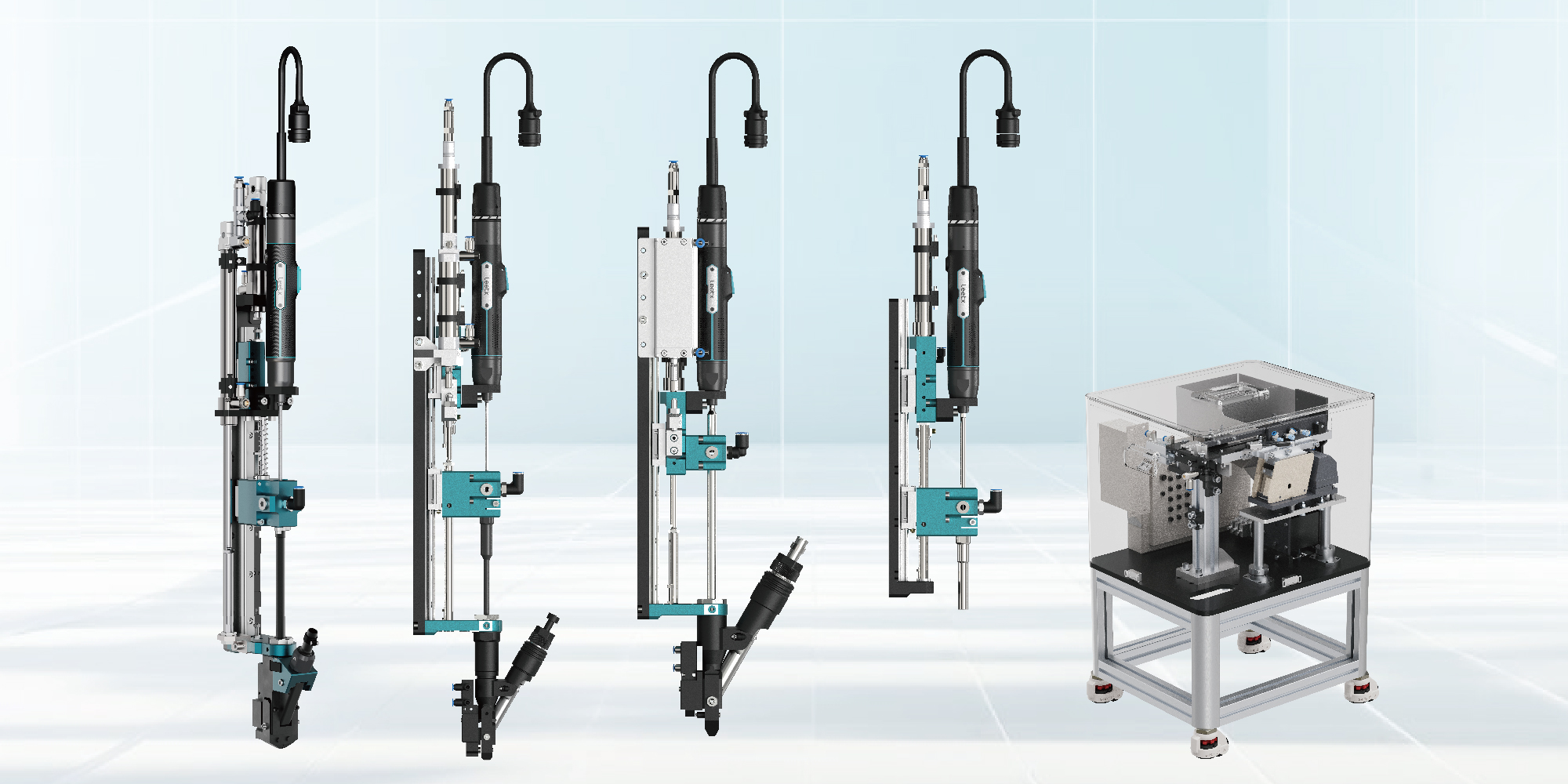
The Leetx AIV-AT vacuum module makes this check before every tightening. A pressure sensor measures the vacuum once the screw should be on the tube. If the level is reached, the head moves down and tightens. If it is not, the head stays where it is and raises an alarm. An empty bit never goes down into the housing, and a missing screw is found at the station, not after the cover is closed.
Coated screws need one more look. Compare samples before and after feeding under the same light, at the surfaces the tooling touches, and inspect the pick-up point for residue. Where the assembly has a cleanliness requirement, the inspection method and the limit should be agreed with quality engineering before the trial.

Handover 3: Can the Nose Reach the Recessed Hole?
The last handover depends on the housing and not on the screw. A standard feed head grips the screw in jaws, and jaws need open space around the hole. Electronics housings rarely offer it.
A practical reference is the space around the screw, out to about 1.2 times the head diameter. If nothing stands in that zone, a standard blow-feed head can be used. If there is a wall on one or two sides, or an arc around the hole, a vacuum blow-feed head is needed. If the hole is fully enclosed, as in a deep counterbore, vacuum pick-up is the usual route.
The AIV-AT covers the middle case and many enclosed ones. The screw is blown to the head, held on a vacuum tube, and the tube extends to the surface of the part. The module works beside a 90° corner, inside a 180° arc and in a 360° counterbore, with internal-drive screws up to a maximum screw head diameter of 14 mm. Two features matter most in a tight housing:
- The tube can match the screw head. The vacuum tube can be made to the same diameter as the head, so the counterbore needs no extra room for the tool.
- The downward force is adjustable. It can be set low enough to protect delicate parts while the bit finds the recess.
Fit is checked in two steps. On a section drawing through the most restricted hole, overlay the nose together with the wall, nearby components, screw head and the room needed to withdraw. Then run the real housing, held as it will be on the line. A loose sample on a bench can shift enough to hide a clearance problem.

Reading the First Fault
When a trial fails, the place where the fault first appears points to the handover that caused it.
For the third case, it helps to stop the motion at first contact and look. A wall may be pushing the nose aside, the screw may lose support before it finds the hole, or the fixture may place the hole off the tool axis. Each cause has a different remedy, so delivery to the hole and the final tightening result should be recorded as separate events.
The Screwdriver Behind the Nose
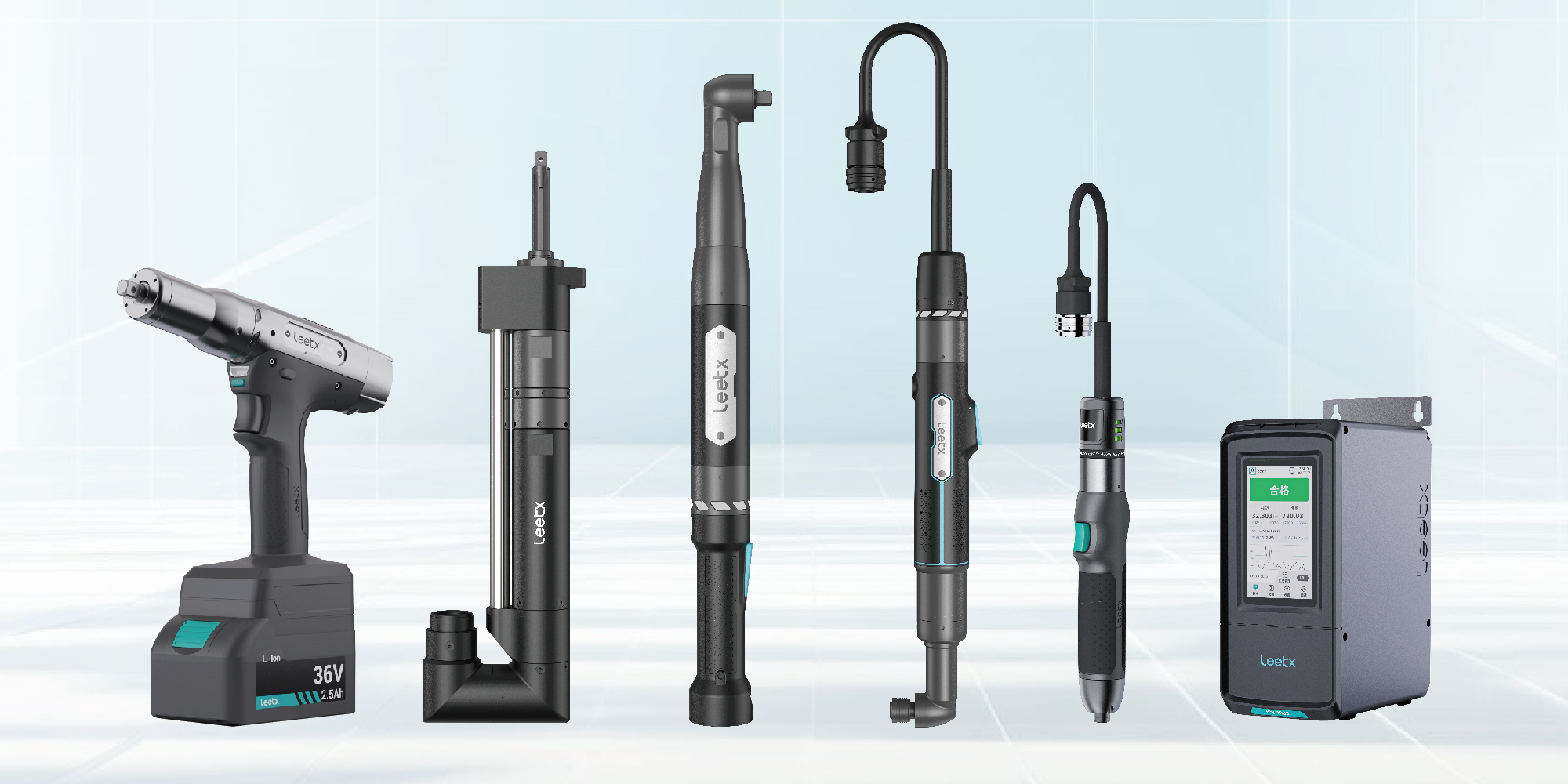
Small screws also need low torque that is measured, not assumed. Leetx EHS screwdrivers start at 0.3 N·m and measure torque and angle at the tool, and ESD versions are available for electronics lines. A stripped boss or a cross-threaded screw then appears as a NOK result at the station.
What to Send for an Application Review
A feeding trial is only as good as its inputs. For a review, send:
- Production screws, with part number, lot, coating and any cleanliness requirement
- A section drawing through the least accessible hole
- A sample housing, with the fixture concept if available
- The time available at the station
It is reasonable to ask for a run that includes refilling, normal tool travel and the least accessible hole, with missed pick-ups, lost screws, entry faults and NOK tightenings counted separately. To arrange a review, contact Leetx.
FAQ About Automatic Screw Feeding for Electronics Assembly
Q1: Can one small screw feeder supply several screw types? A TF90 presents one screw type at a time. A second type needs its own presenter, or a change of track width and disc between batches.
Q2: Does a counterbore always require vacuum pick-up? No. If the screw can be blow-fed, a vacuum blow-feed head reaches many counterbores. Pick-up is needed when the screw itself cannot travel in a tube.
Q3: Which screws suit the AIV-AT module? Internal-drive screws with a maximum screw head diameter of 14 mm.
Q4: Is feed rate the same as station cycle time? No. Feed rate describes how fast screws are supplied. Cycle time also includes positioning, tightening and part handling.
Sources