














Automotive Tightening Systems for Battery, Powertrain, Chassis and Final Assembly Stations
No single tightening tool suits a whole vehicle line. Battery pack covers are usually fastened with cordless tools, engine and gearbox housings with fixtured spindles, chassis joints with angle-head electric nutrunners, and final assembly with a mix of screwdrivers and cordless tools.
The split follows from the conditions at each station. Some parts are large, and the operator has to move around them. Some sit in a fixture, with the bolts always in the same place. Some combine high torque with very little room. This guide to automotive tightening systems takes the stations one at a time: what is normally used, why, and what to check before the tool goes into production.
The general method behind these choices is set out in the industrial tightening system selection guide.
Automotive Tightening Systems at a Glance
Battery Stations: Reaching the Cover and Restarting After a Stop
A pack cover has many fastening points spread around a large part, and the operator moves along it. A cable would have to follow the operator around the pack and across the cover, which is why cordless tools are the usual choice here.
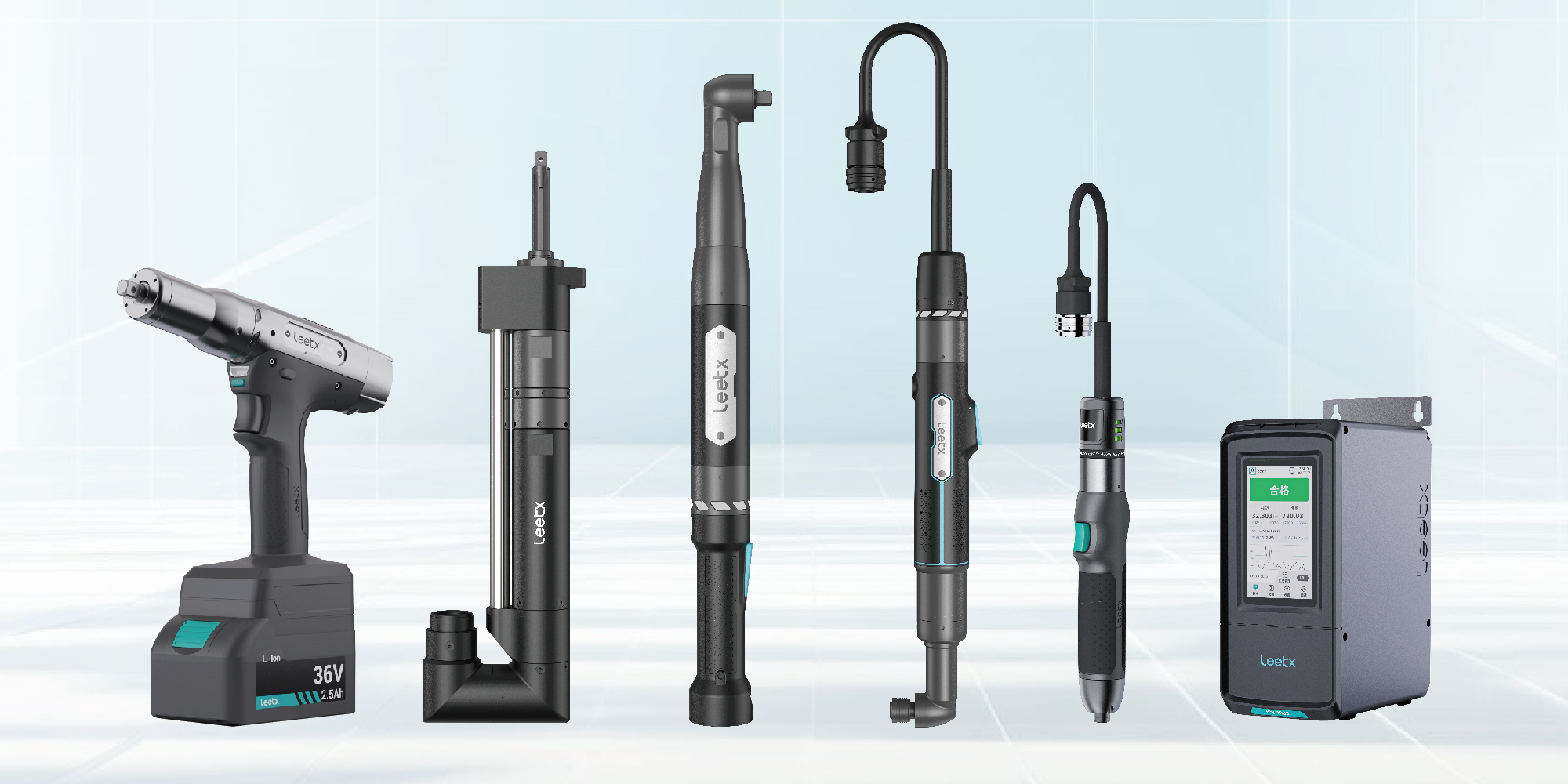
Leetx commonly uses EWP/EWA cordless tightening tools for battery pack cover fastening. Tool selection for battery modules and other automotive components depends on torque requirements, tool access and process validation.
The EWP pistol-grip tools cover 0.5–15 N·m and the EWA angle tools cover 6–105 N·m. Both measure torque and angle at the tool. One WCS.2000 controller manages up to 10 cordless tools, so several operators can work on the same pack.
Two things are worth checking on the real station. The first is reach. A corner fastener that looks open from above can be blocked by a clamp, so the walk around the pack should be done from the operator's working side, with the production clamps closed.
The second is the restart. Cordless work is interrupted more often than fixtured work, for example when a battery is changed in the middle of a cover. After the stop, the operator has to know which position was completed last and which comes next, and no result may be lost. On Leetx cordless tools, results recorded while the wireless link is down are uploaded once the tool reconnects.
For a module or tray, the same checks are repeated with its own fixture and with the surrounding components installed.

Powertrain Stations: Fixtured Spindles for a Repeating Bolt Pattern
An engine or gearbox housing is the opposite case. The part sits in a fixture, the bolt positions are known, and the same pattern repeats at high volume. These are the conditions for automatic tightening, with the reaction torque taken by the machine and not by an operator.
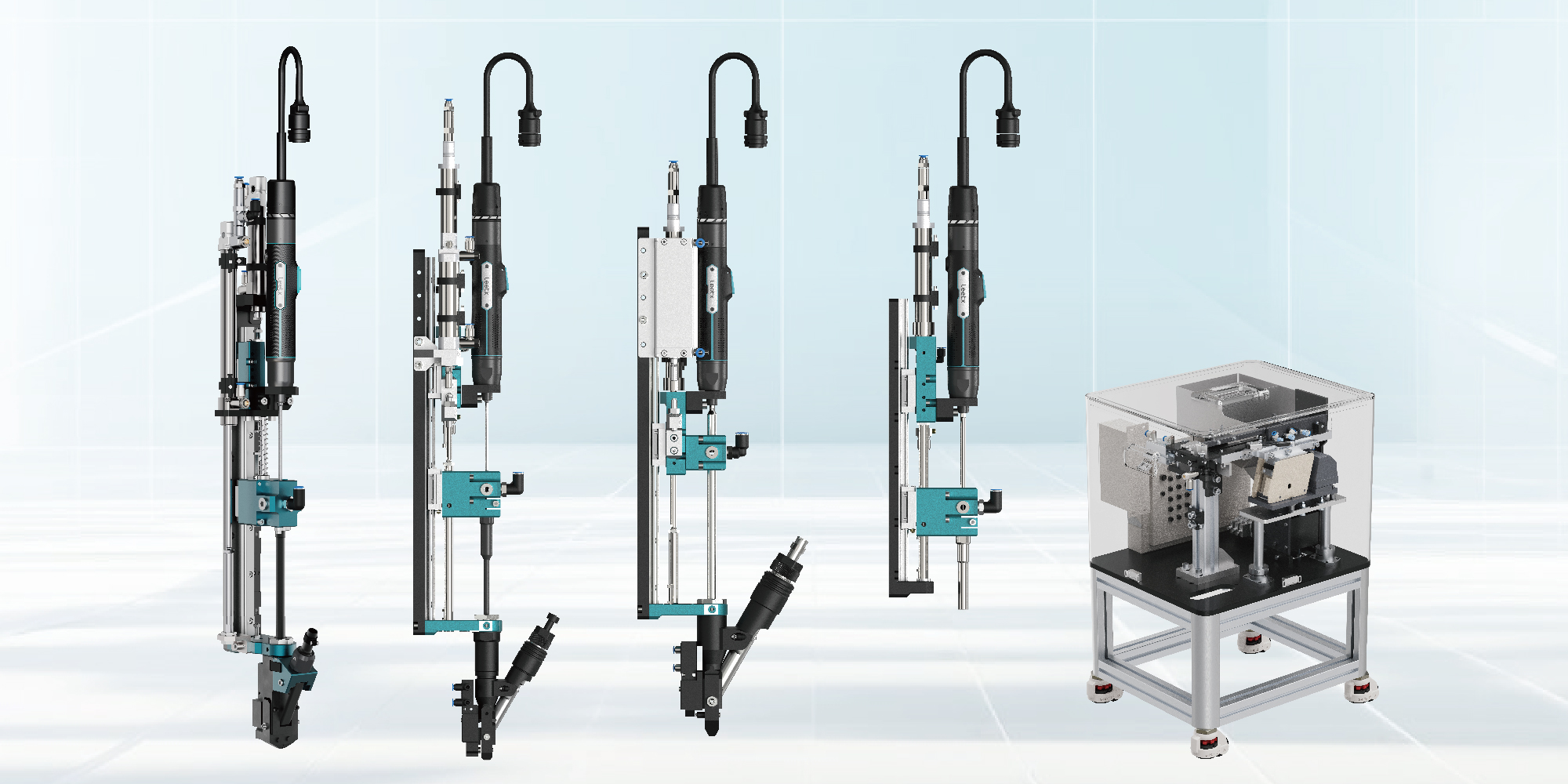
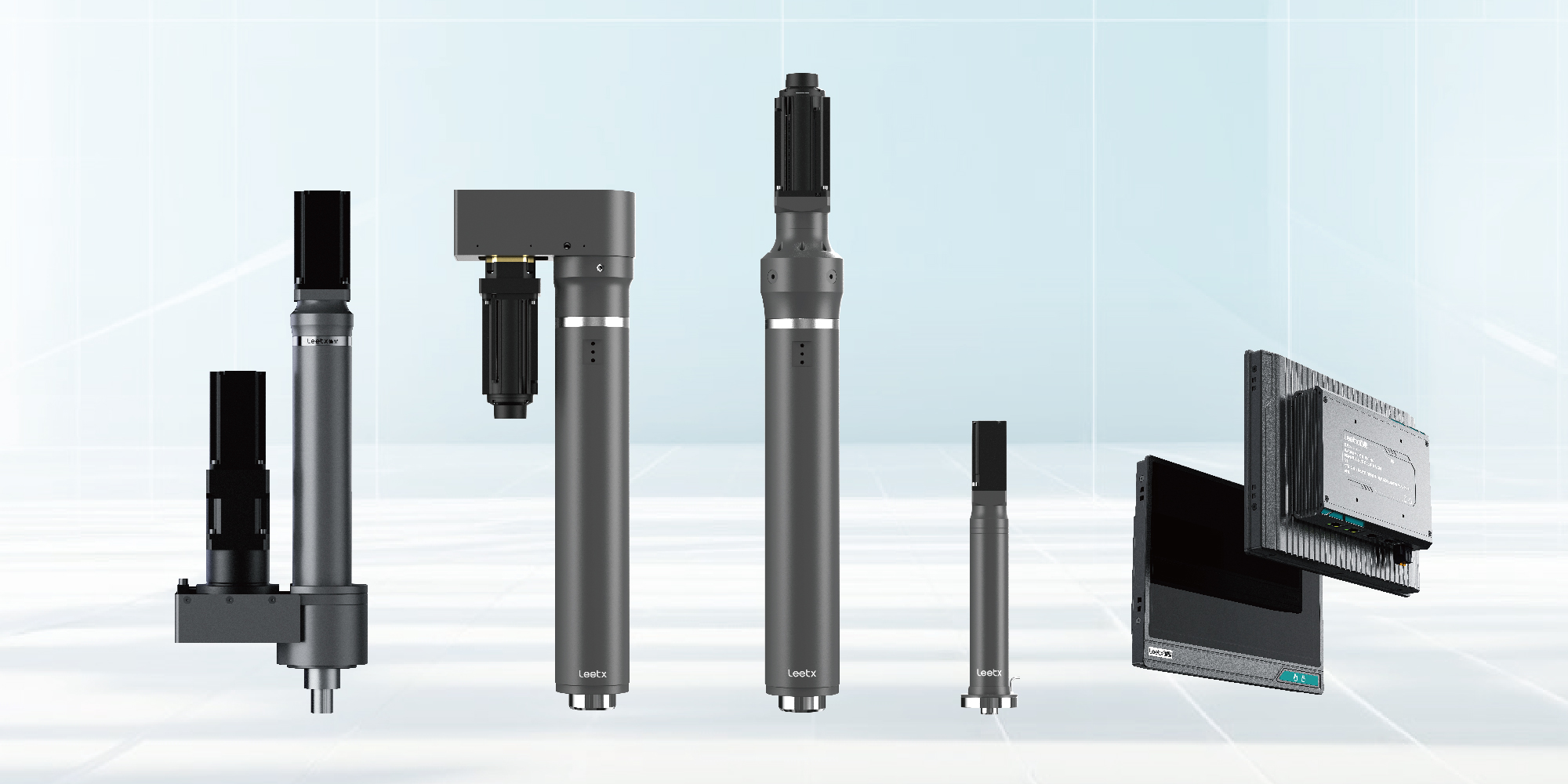
Leetx EFS fixtured spindles are used at this kind of station. The series covers a torque range of 4–500 N·m, with spindle torque accuracy of ±3% at 6σ, and up to 20 spindles can be tightened in synchronisation. Whether a group of bolts is better served by one spindle that moves or by several that work together is covered in when to choose a multi-spindle torque tool.
Three things are checked before production:
- Position. On the housing drawing, check the locating surfaces, the bolt axes and the room the sockets need to retract.
- Sequence. From the joint specification, confirm which bolts may be tightened together.
- Cycle time. Time the cycle from loading to release, so that clamp motion and spindle travel are included.
One point is often missed when limits are written. If the drawing calls for angle monitoring after a certain torque is reached, that starting torque belongs in the trial record. Two angle readings taken from different starting torques describe different parts of the tightening and cannot be compared. How the two values work together is explained in torque control or angle control.
Chassis and Subframe Stations: Electric Nutrunners and the Reaction Path
Chassis joints combine higher torque with poor access. Many are approached from below or from the side, and a socket may fit on the bolt while the tool body fouls a neighbouring component.
An angle-head electric nutrunner is the usual answer. The Leetx NRA angle-head nutrunner has a compact bevel-gear head for confined positions, and the series covers 6–450 N·m. Where the joint can be reached along the bolt axis, the NRS inline nutrunner covers 5–65 N·m.
The second question at these stations is where the reaction torque goes. Above a certain torque an operator should not hold it by hand, and the tool is mounted on a reaction arm. Leetx supplies arm and positioning systems together with the tools.
In the trial, the tool is tried at the tightest position with the surrounding parts in place: socket axis, room for the operator's hand, and the path for taking the tool out again. If a reaction arm is proposed, it has to reach every position and still give support at the least accessible bolt. The support arrangement is recorded with the tool selection, so that the production trial uses the same setup.

Final Assembly: Variants on a Moving Line
Final assembly has the widest mix of joints: trim and component screws at low torque, brackets in the mid range, and work on a vehicle that moves with the line.
Where positions change from variant to variant, a handheld tool is the practical choice. Leetx EHS and EHA screwdrivers cover 0.3–22 N·m across the range, and the cordless EWP and EWA tools take over where a cable would cross the vehicle or the walkway. Where a bracket is always located in the same place, a fixed spindle is also a candidate.
Mixed production adds a risk of its own. Suppose two trim brackets share a station, one with two fasteners and one with three. Two OK results could then mean a finished two-fastener bracket or a three-fastener bracket with one screw missing. The tightening results alone cannot tell the two apart. The station has to know which variant is in front of it and how many fasteners it needs.
A simple trial shows whether it does. Load the three-fastener variant, stop the cycle after the first position, and ask the operator to identify the two that remain. The trial also shows which fields the tightening traceability record has to keep: part ID, physical position, original result and any rework result.
What Every Automotive Tightening System Has to Prove
The tool format differs from station to station, but three requirements are the same everywhere.
The tool matches the risk class of the joint. VDI/VDE 2862 Part 1 sorts automotive joints into category A (danger to life), B (breakdown) and C (non-critical), and sets minimum tool requirements for each. A category A joint is treated the same whether the tool is corded or cordless. What the tool has to demonstrate is described in transducerized tightening tools for safety-critical joints.
The response to a NOK result is decided in advance. What happens after a not-OK (NOK) result, including who may release the part, is written into the process before production starts.
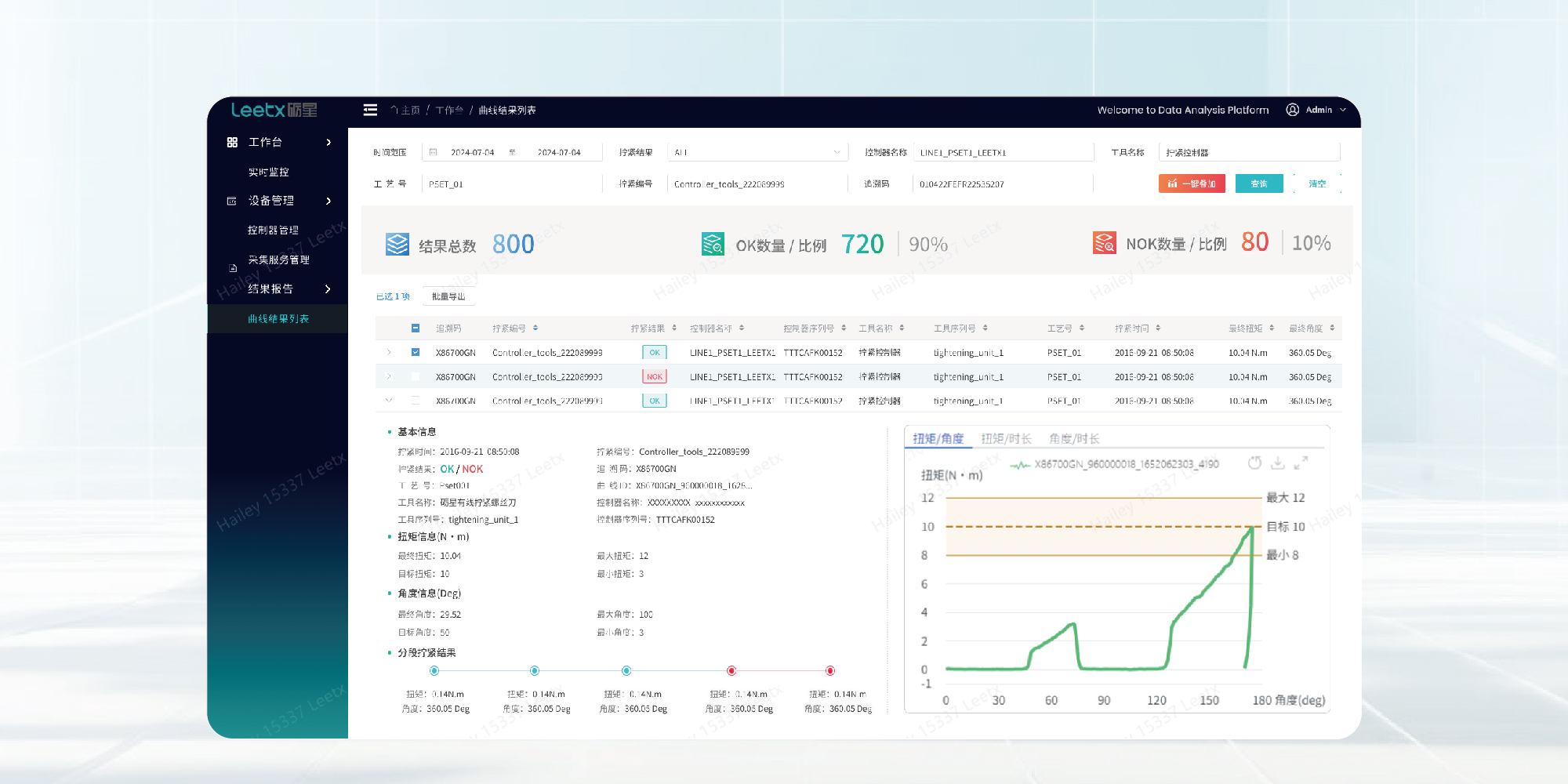
Every tightening is recorded. Each result is linked to a vehicle or part and stored. Tightening results are uploaded in JSON format via HTTP to Leetx's Datainsight data analysis software for statistical process control (SPC) analysis.
What to Send for a Station Review
A station can be assessed from a short set of inputs:
- The joint list with the approved tightening requirements
- A drawing for each variant
- The station time allowance
- A sample of the record the plant uses to release a part
- The hardest position to reach, marked on the drawing
- The interruption the trial should reproduce
Leetx develops its tools, controllers and software in-house and supplies complete tightening stations as well as individual tools. For model selection and detailed specifications, contact Leetx.
FAQ About Automotive Tightening Systems
Q1: Can a cordless tool be used on a safety-critical automotive joint? Yes, provided the tool measures torque and angle and every result is recorded. Leetx EWP and EWA tools measure both. The joint itself is approved against the plant's own requirements.
Q2: When does an electric nutrunner need a reaction arm? When the reaction torque is more than an operator should hold. The limit depends on the torque, the tool geometry, the working posture and the plant's ergonomic rules.
Q3: Can one line use both corded and cordless tools? Yes. Each station is chosen on its own conditions. What has to be common is how the program is selected and how each result is linked to the right part.
Q4: Which tools does Leetx commonly use for battery pack covers? Leetx commonly uses EWP/EWA cordless tightening tools for battery pack cover fastening.
Sources